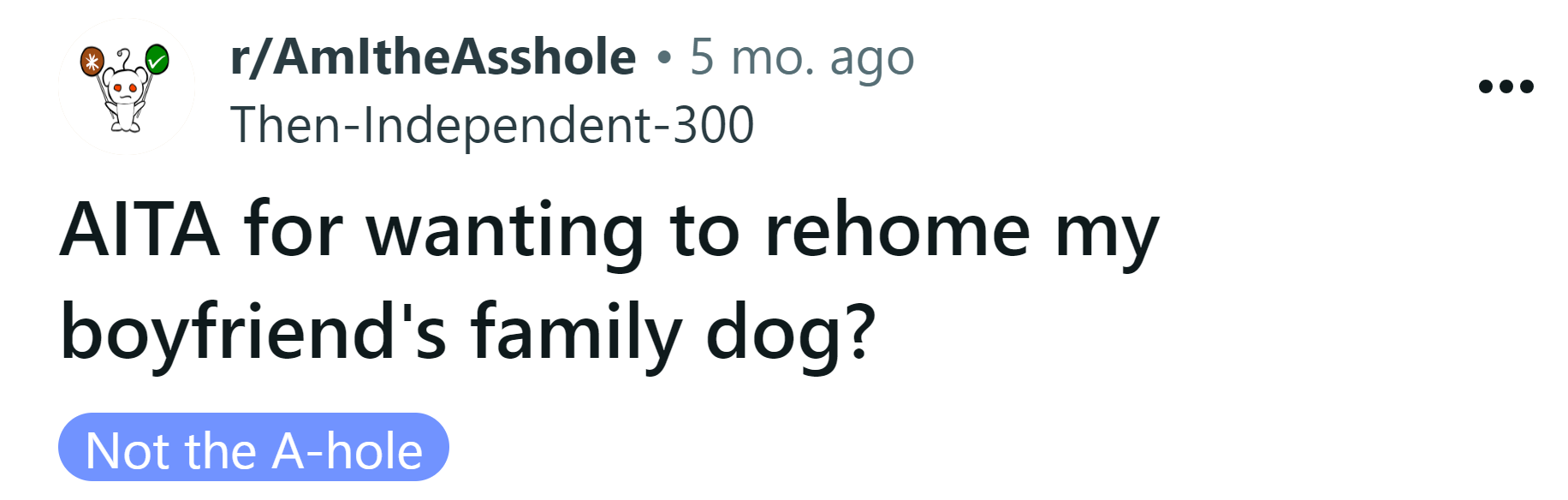
Redditor Asks If She's An A**hole For Asking Boyfriend To Rehome His Beloved Childhood Dog

A 28-year-old woman is getting roasted on Reddit after she asked her boyfriend to rehome his childhood dog, Teddy. And yes, the dog is basically treated like family, with a history that goes way beyond “we should probably find him a new place.”
Here’s the messy part: Finn’s dad is moving into a care facility, so Teddy can’t stay with him anymore. Finn and the OP were even promised they would take Teddy in, but now the OP says she doesn’t want a dog at all, even though Finn is emotionally attached to Teddy in a way that feels non-negotiable.
So when Teddy’s future gets tied to Finn’s promise and the OP’s “no thanks,” the whole relationship gets put under a microscope.
The Redditor asked if she's an a**hole for wanting to rehome her boyfriend's family dog.
She explained that she and her boyfriend Finn have been together for three years.

Finn's family has a dog named Teddy who has been staying with Finn's dad, but now that he is moving into a care facility, Teddy needs a new home.

Childhood pets often embody deep emotional connections, serving as early lessons in love and companionship. In the case of the Redditor's request for her boyfriend to rehome his cherished dog, this emotional bond is palpable. The intensity of attachment to a lifelong pet can trigger strong protective instincts, revealing the complexities at play when such a beloved companion is perceived as being in jeopardy.
This scenario underscores the intricacies of possessiveness in relationships, where the stakes involve not just a pet but the very fabric of shared experiences and emotional investments. The difficulty of navigating these feelings suggests that the conversation about rehoming might require more than just practical considerations—it calls for a deep understanding of the emotional landscape involved.
Attachment theory provides significant insight into how individuals relate to their pets and partners.
The Emotional Attachment to Pets
Finn's dad made them promise to take care of the beloved dog.

Finn promised his dad that he and the OP would keep Teddy.

But the OP says she doesn't want a dog.

That promise Finn made to his dad is hanging over everything, like Teddy is the real main character of this breakup risk.
The boyfriend's deep bond with his childhood dog is not merely a nostalgic attachment but rather a symbol of comfort and stability that has been woven into the fabric of his life. This emotional connection may significantly impact his willingness to consider rehoming the dog, as it represents more than just a pet; it embodies cherished memories and a sense of security that can be hard to relinquish. In this context, the Redditor's request raises important questions about the balance between personal responsibility and emotional ties in relationships.
She says he's "nosy" and clumsy and their flat is too small for him.

The final straw was when Teddy broke the OP's expensive vase.

The OP suggested that they should rehome Teddy, but Finn says they just need to declutter so that there's more room for him.

The dilemma presented by the Reddit user highlights the intense emotional bonds that often form between pets and their owners. In this case, the boyfriend's attachment to his childhood dog may trigger a profound sense of loss at the mere suggestion of rehoming. These bonds are not just sentimental; they are often intertwined with a sense of identity and unconditional love that pets provide. Therefore, the idea of asking someone to part with their pet can evoke significant anxiety and distress, making it a complicated issue not only for the pet owner but also for the relationship as a whole.
Finn is trying to hold onto the comfort Teddy represents, while the OP keeps pushing that she just does not want the responsibility.
Compromise is a crucial element of any healthy relationship, particularly when individuals have differing priorities.
Relationship psychology emphasizes the need for communication and compromise when dealing with conflicts over pets.
The OP says Finn does take Teddy on walks each morning.

Finn is upset with the OP for suggesting he give up his family dog.

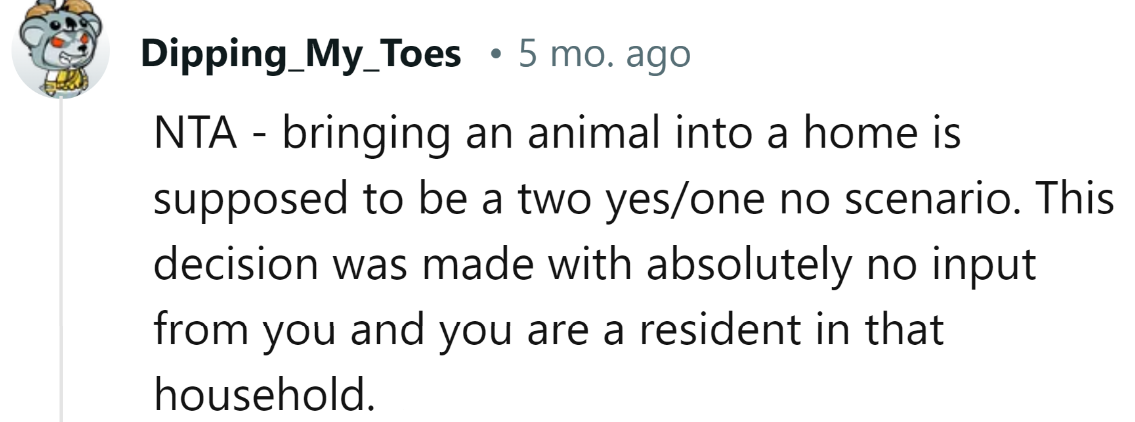
Here's how people reacted.
Utilizing a calm and understanding demeanor can help facilitate a constructive conversation, allowing both partners to express their feelings openly.
This approach can significantly reduce emotional tensions and promote a healthier dialogue.
It echoes the wife who demanded rehoming, then regretfully pushed the issue further.
Individuals often react defensively when they feel threatened, which can complicate discussions about important decisions.
Practically, it’s essential for the girlfriend to express her feelings about the dog and its significance to her.
Engaging in a calm discussion about how both partners can reach a compromise regarding the dog's future could help alleviate tension.
Proposing solutions, such as finding a pet-friendly space, can also show a willingness to accommodate both partners' needs.
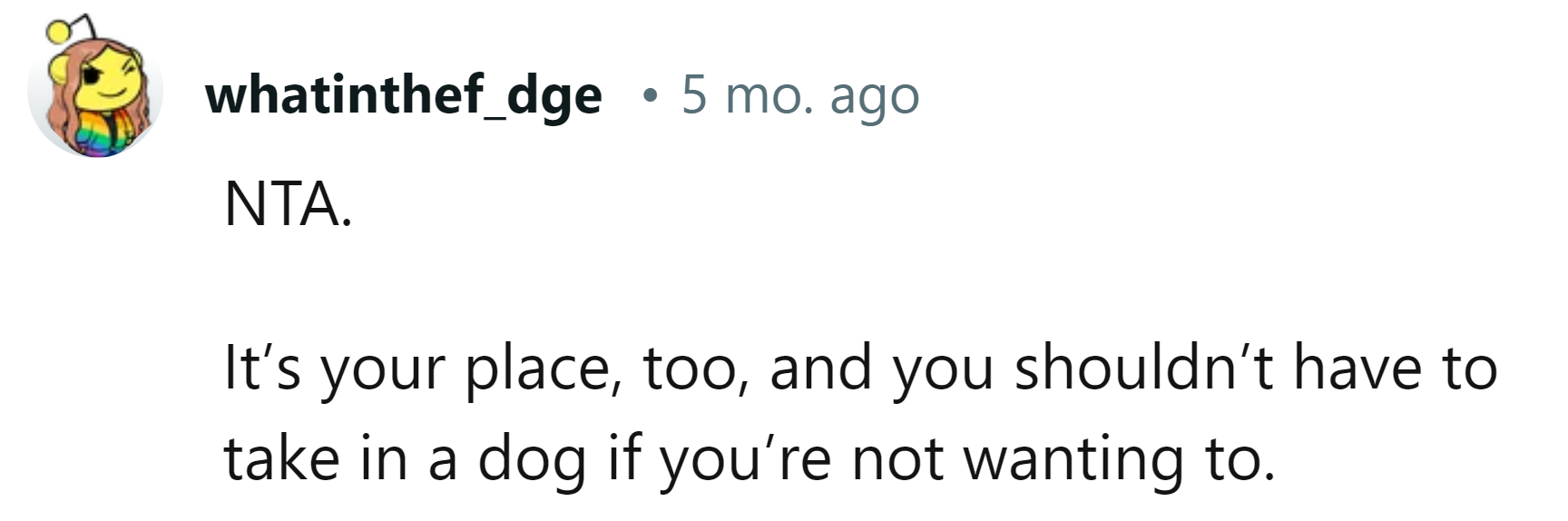
NTA.
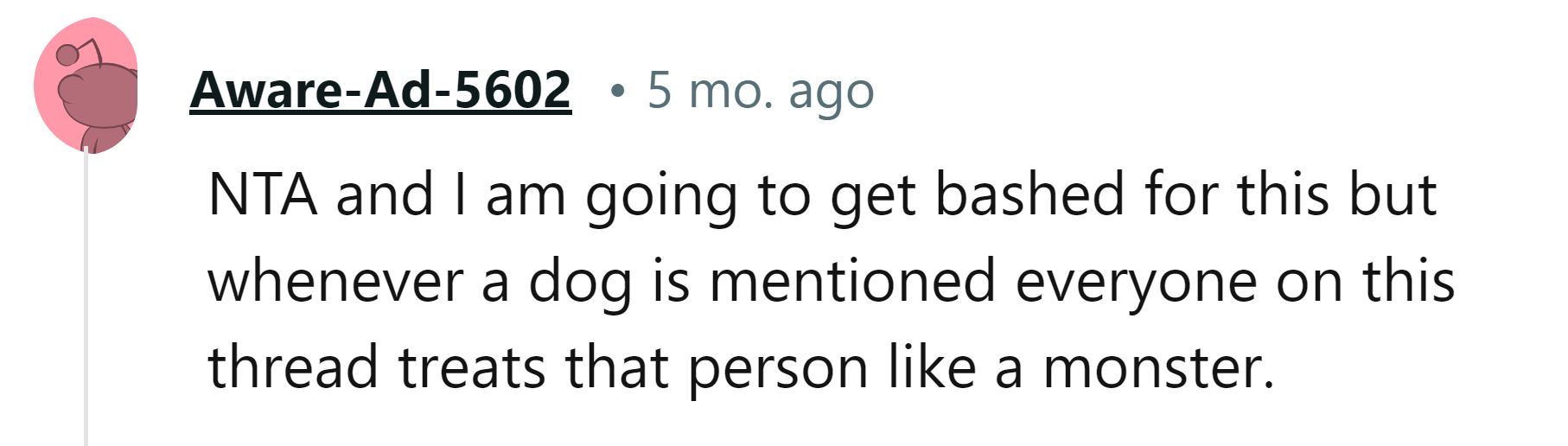
"It's your place too."
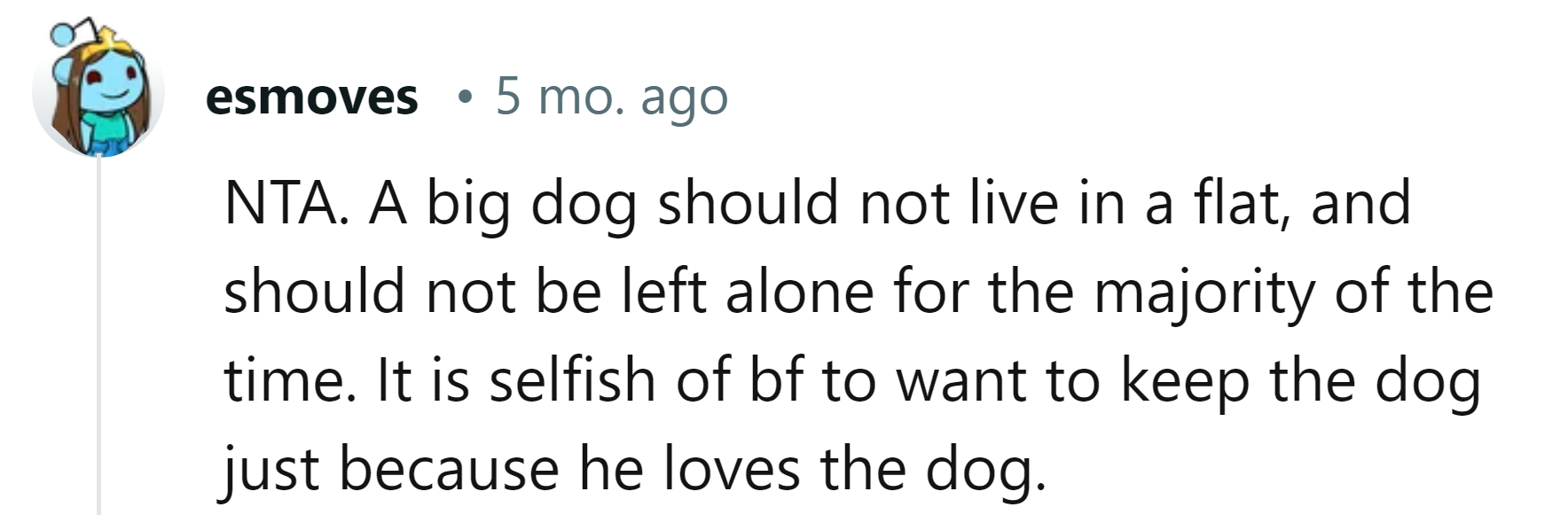
"A big dog should not live in a flat."
It gets extra tense because Teddy is not some random pet, he’s the childhood dog that’s been part of Finn’s life for years.
Compromise is a crucial component of healthy relationships, especially when it comes to contentious issues like pets.
Research in relationship dynamics indicates that finding common ground can lead to improved satisfaction for both partners.
For the Redditor, considering alternative solutions for the dog's care could demonstrate a willingness to support her boyfriend's attachment without compromising her own needs.
Seeking Professional Guidance
Involving a therapist can be beneficial when navigating complex relationship issues. Therapy provides a supportive environment where couples can explore their feelings about pets and their significance in their lives.
The Psychological Impact of Compromising on Pets
Research indicates that compromising on issues involving pets can have a significant psychological impact on both partners.
This underscores the importance of addressing these issues proactively to avoid future resentment.
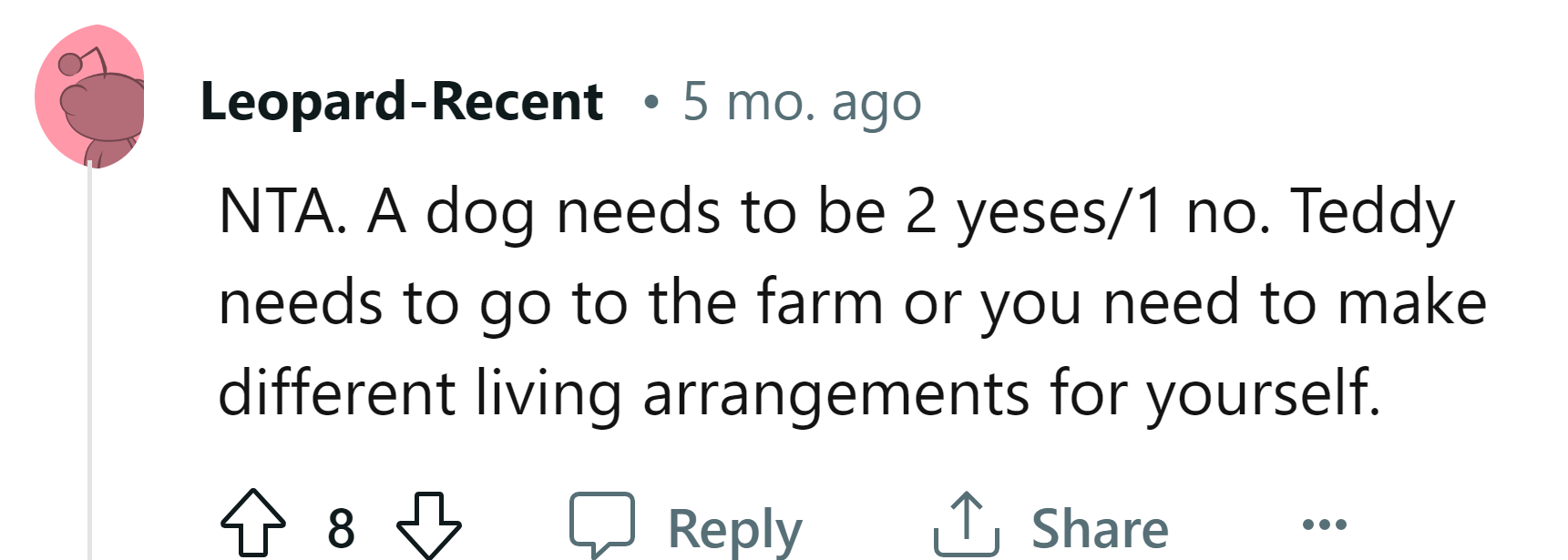
"Teddy needs to go to the farm."
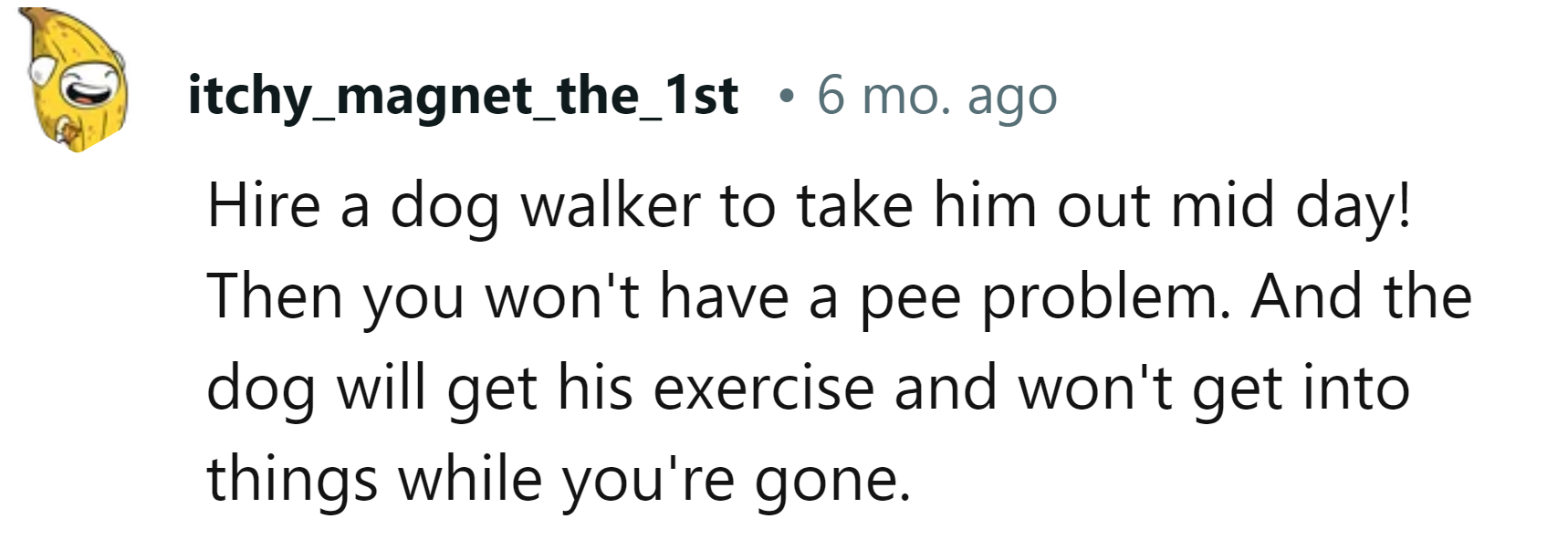
"Hire a dog walker."
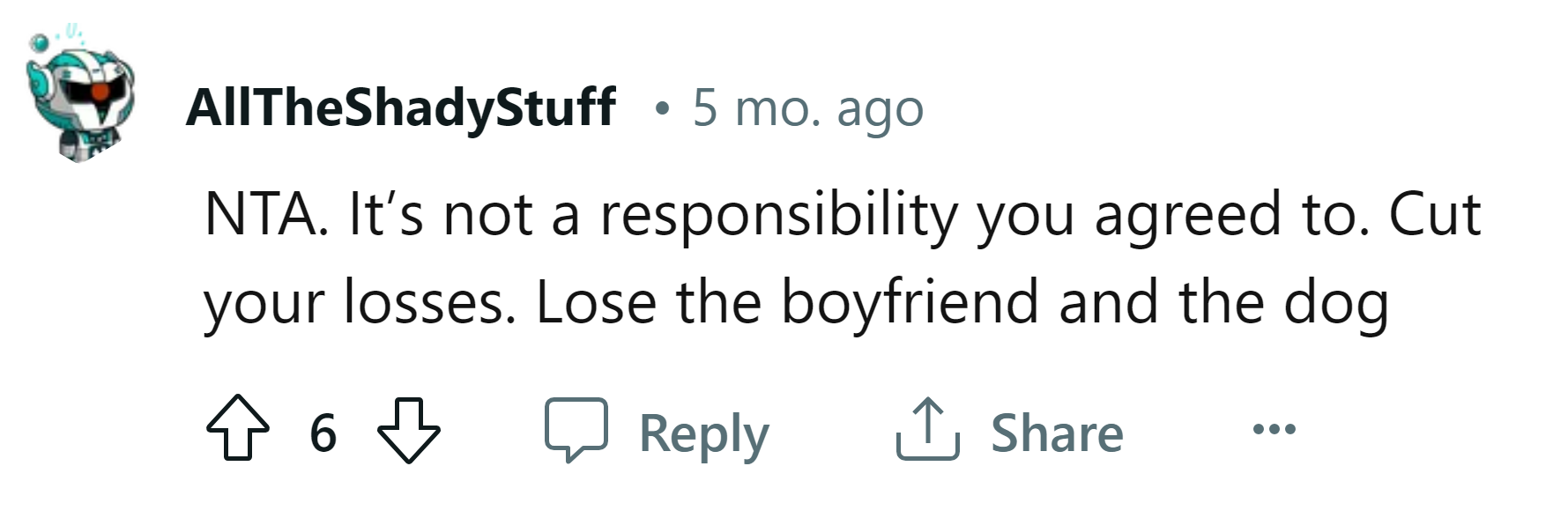
"Cut your losses."
Once Finn’s dad has to move and Teddy’s home becomes urgent, the OP’s “I don’t want him” lands like a betrayal to Finn.</p>
Ultimately, fostering open communication is key to resolving conflicts regarding pets in relationships.
Engaging in dialogue that prioritizes listening can help both partners feel heard and valued.
This not only strengthens the relationship but also promotes understanding and cooperation.
Ultimately, fostering open communication and empathy can mitigate the emotional strains associated with pet ownership in relationships.
Encouraging regular discussions about each partner's feelings regarding the pet can promote understanding and compromise.
Additionally, considering each other's emotional attachments can lead to more amicable resolutions that respect both partners' needs.
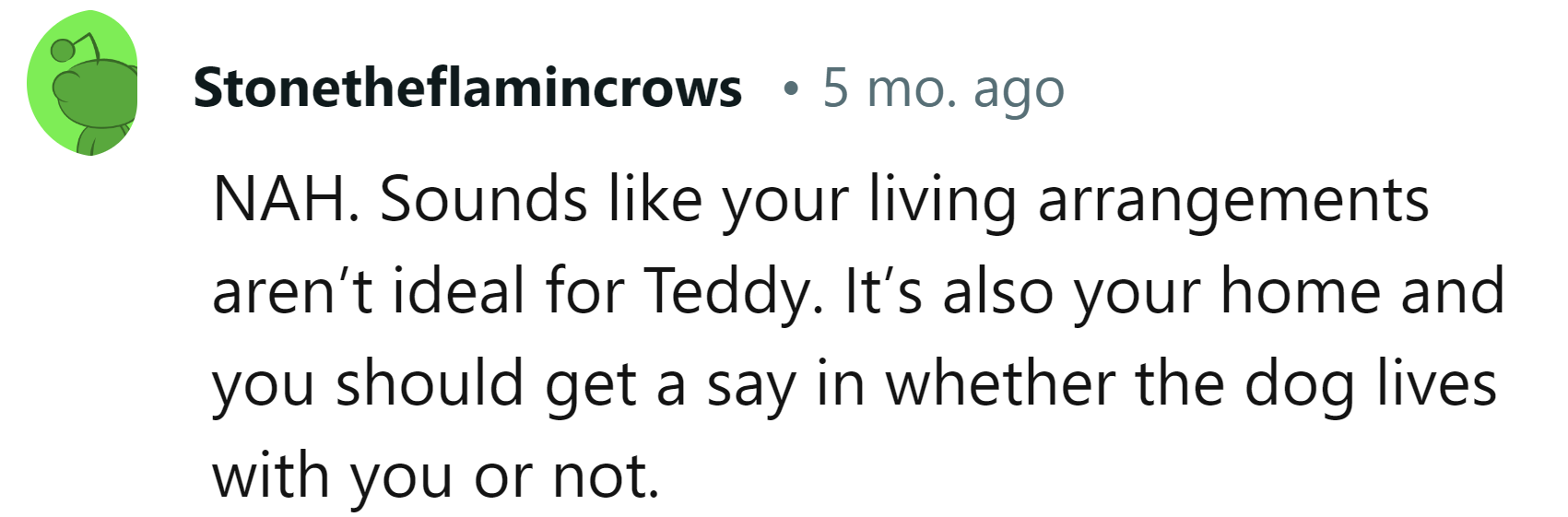
NAH.
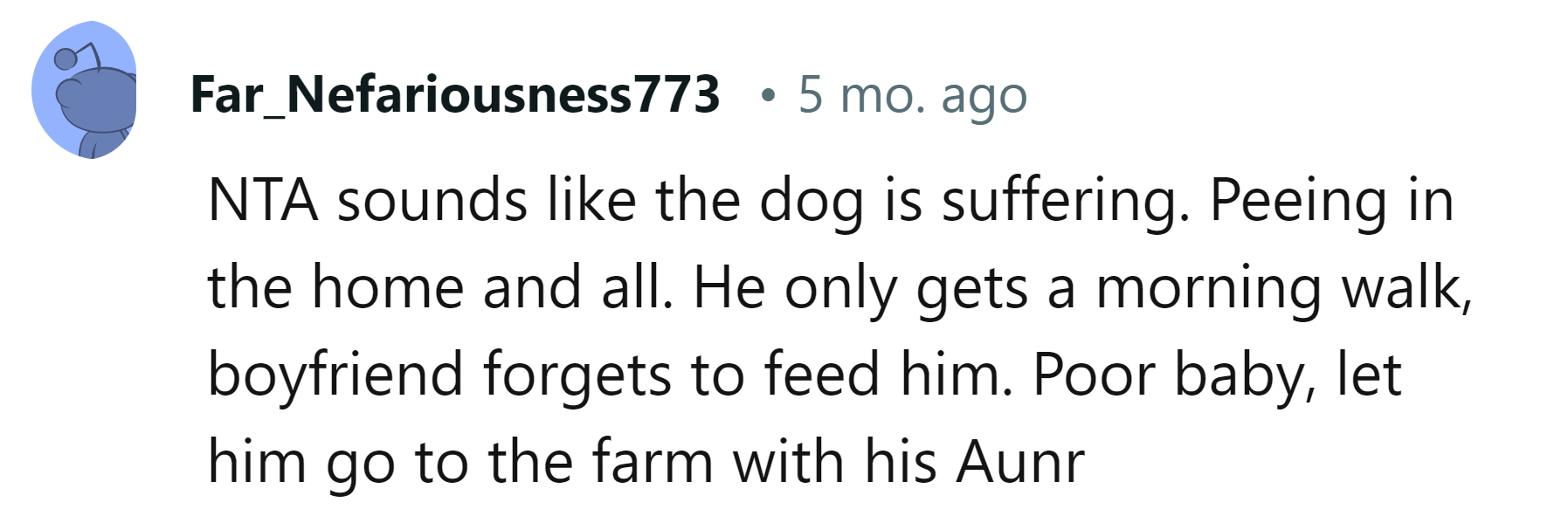
"Sounds like the dog is suffering."
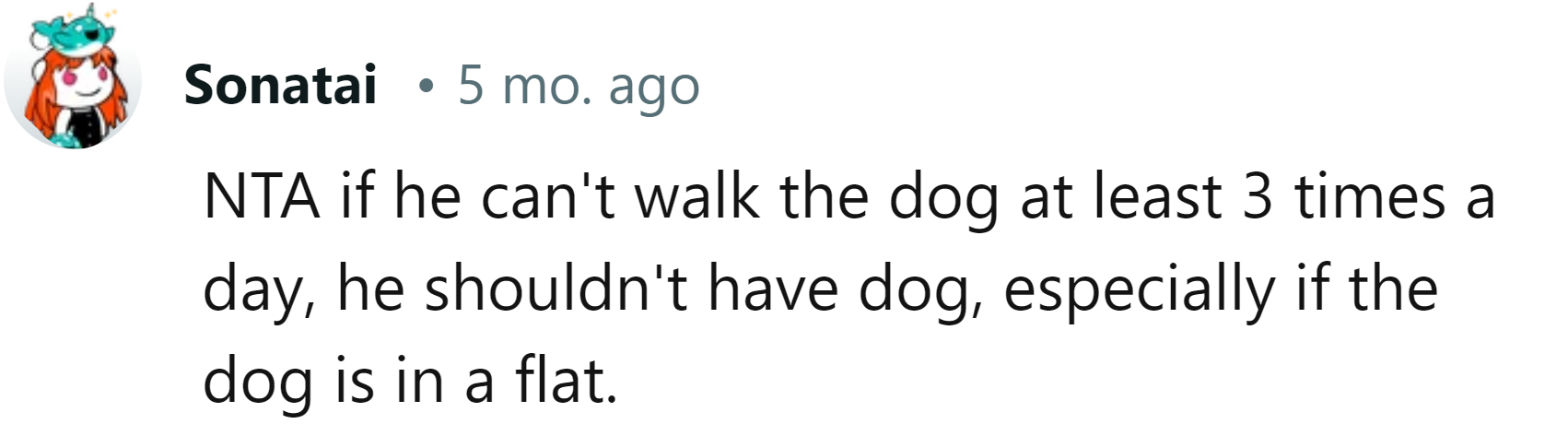
"He shouldn't have a dog."
What are your thoughts on this situation? Do you think the OP should be more understanding of Finn's dedication to Teddy, or is it understandable that she wouldn't want a dog under the circumstances?
We would love to hear your opinions on this topic. You can share your thoughts with us in the comment section.
The situation surrounding the Redditor's request for her boyfriend to rehome his cherished childhood dog highlights the intricate emotional complexities that often accompany pet ownership in relationships. When one partner feels compelled to make such a significant demand, it can uncover underlying tensions and misalignments in values.
This particular case illustrates the critical need for open communication and empathy. The boyfriend's attachment to his dog may stem from deep emotional ties that are not easily severed. Navigating this request requires both partners to engage in a thoughtful dialogue that respects each other's feelings and needs.
Ultimately, finding a resolution that honors the emotional bonds both to the pet and to each other could lead to a deeper understanding and a strengthened relationship.
The article highlights the significance of recognizing the deep bonds that individuals form with their pets, which can complicate discussions about rehoming. Effective communication is vital in this scenario, as the couple must address not only the practical aspects of pet care but also the emotional ramifications of such a decision.
Understanding each partner's feelings toward their pets can lead to more productive conversations, helping both individuals to arrive at a resolution that respects their emotional needs while considering the well-being of the dog. This situation underscores the delicate balance of love, responsibility, and compromise that is essential in fostering a healthy relationship amidst the challenges of pet ownership.
The emotional connections that individuals forge with their pets play a crucial role in shaping their interpersonal relationships, as evidenced by the situation involving the Reddit user who believes her boyfriend should consider rehoming his childhood dog. This dilemma highlights the complexities of pet ownership and the intimate bond that can complicate decisions regarding animal care.
Recognizing these dynamics is vital for addressing conflicts that arise in such contexts. By fostering empathy and understanding, parties can navigate these sensitive discussions more effectively, ensuring that the needs of both the pet and the individuals involved are acknowledged.
Ultimately, embracing open communication and a willingness to compromise may pave the way for more amicable resolutions in disputes surrounding pet ownership, as seen in the Redditor's challenging circumstances.
Now they’re both stuck wondering if asking Teddy to leave means the OP is the a-hole.
Grief and a dog rehome turned into a full family blowup, see how a late father-in-law’s dog sparked a dispute.
Share this article: