
Woman Struggles After Her MIL Tries To Manipulate Her Into Giving Up Her Dog To Become Her Own Son’s Service Dog

Some family drama starts with a small request and turns into a full-blown standoff. In this Reddit story, a woman is trying to protect her new puppy, Scout, while her mother-in-law pushes hard for the dog to be given up and trained as a service dog for her son.
The problem is not just about the dog, it is also about a shaky relationship, public humiliation, and a husband caught between his wife and his mother. As the pressure builds, OP has to decide whether keeping Scout makes her selfish, or whether her MIL is simply crossing every line in the book.
Reddit had plenty to say, and the comments did not hold back. Read on.
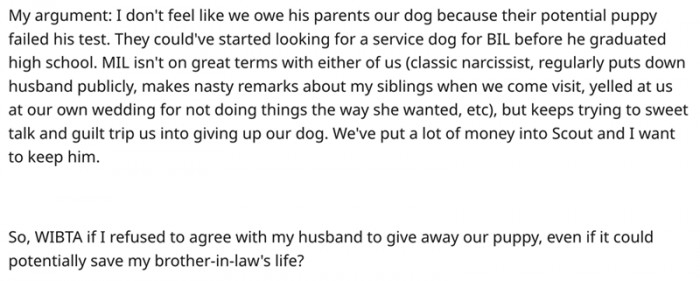
WIBTA for refusing to give up my puppy to be BIL's service dog?
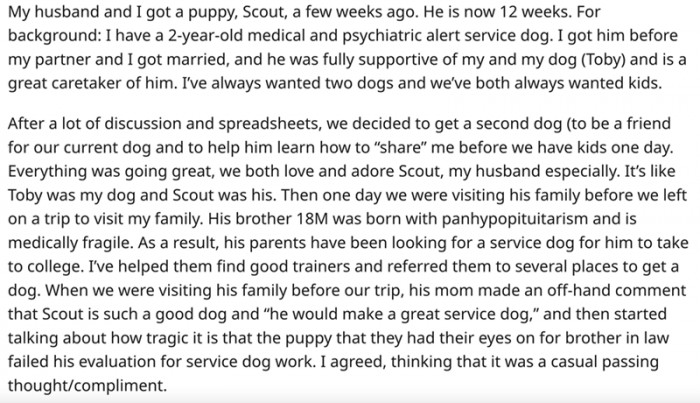
The trainers did an aptitude and temperament test
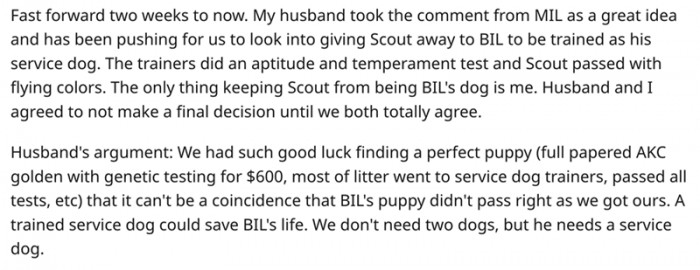
MIL isn't on great terms with either of us
Emotional attachment is a big part of why this story hits so hard, especially when a pet suddenly becomes the center of a family fight.
In this case, the woman is not just saying no to giving up her dog, she is also pushing back against a mother-in-law who keeps trying to force the issue.
Most of the time, we regret everything that has happened, and like the individual in question, we wish we could undo everything. We can see why the OP is trying so hard to be patient with her MIL and not react to everything she says, but we wouldn't have accepted that passing remark as being so fleeting.
Fortunately, since nothing was yet set in stone, the OP had the opportunity to hear what the kind folks on Reddit had to say before making a final decision.
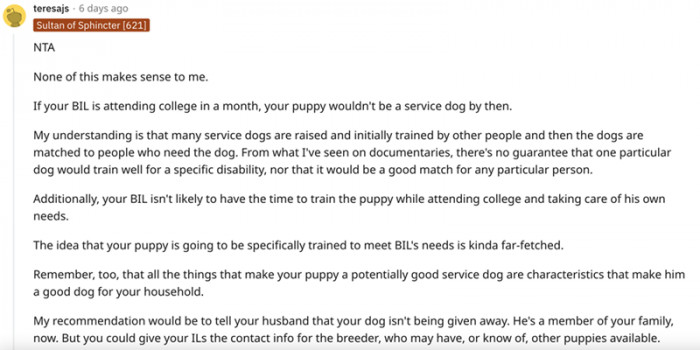
All the things that make your puppy a potentially good service dog
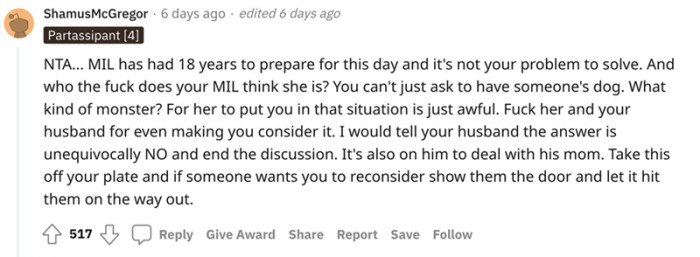
It's also on him to deal with his mom
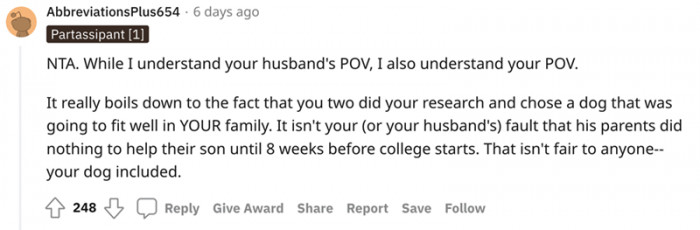
It isn't your fault that his parents did nothing
That is where the family tension really starts to show.
In this situation, the pressure is not coming from one direction, and that makes the whole thing even messier.
This is similar to the man who asked his SIL to keep her rescue dog away, after he expected backlash and emotional blackmail.
In the story, the OP is obviously upset, and the husband undoubtedly feels restrained. Has anyone considered what this implies for poor Scout, though?
Just when he is settling into his new home, someone else must decide whether he will work all his life or simply become a typical dog. Everything about it is terrible, but then check out more comments from Redditors.
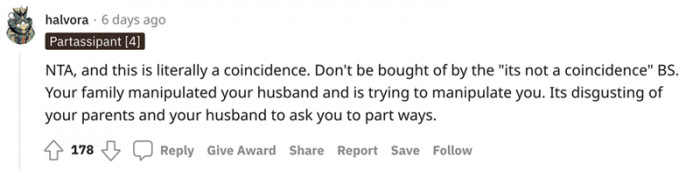
Your family manipulated your husband
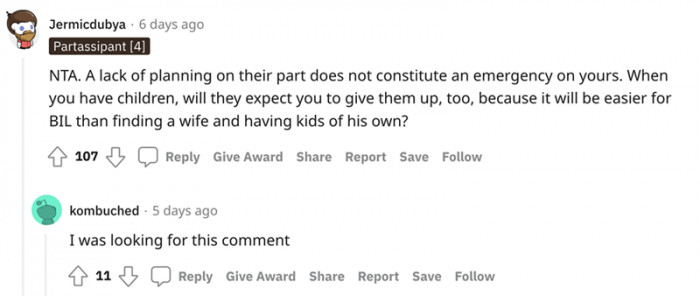
A lack of planning on their part does not constitute an emergency on yours
Allowing his mother to make decisions in their home
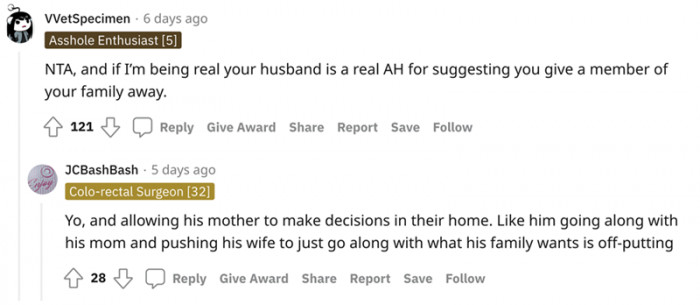
Boundaries are the real issue here, and Reddit definitely noticed.
Furthermore, it’s essential to recognize that emotional decisions often come from a place of fear or insecurity. The woman should reflect on her feelings about her dog and her family dynamics to better understand the stakes involved.
Giving Scout to his brother is husband being too lazy
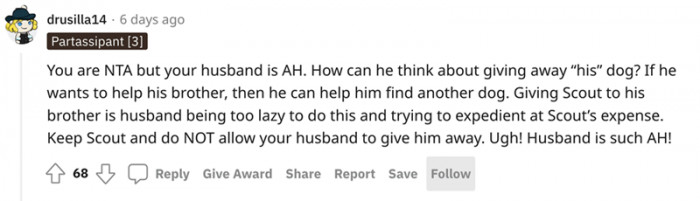
No pawrent who truly understands the value of their dog will give them up so easily, even when the situation is dire. On one hand, we can’t blame the OP for wanting to keep Scout, and on the other hand, we understand that her husband is just looking out for his brother, but then a decision has to be made.
Drop your advice for the OP in the comments below.
That is the kind of pressure that can make a simple family disagreement spiral fast.
The emotional turmoil experienced by the woman in this scenario highlights the profound impact of pet ownership on personal relationships and decision-making. Her struggle against her mother-in-law's attempts to manipulate her into giving up her dog for the benefit of her son reveals the complexities of familial expectations and emotional attachments. The bond she has formed with her dog is not merely a pet-owner relationship; it is a significant part of her identity and well-being. This situation underscores the importance of asserting one's needs in the face of external pressures. By navigating these intricate emotional ties, individuals can strive to maintain family harmony without compromising their own emotional health.
Want the “free dog” fight too, where a husband calls his wife ungrateful for refusing a hand-me-down? Read the Redditor who stood her ground.
Share this article:





