20 Fascinating Facts About Cats That Will Amaze You

Some cat facts are cute, then weirdly specific, and then suddenly you’re staring at your own furball like, “Wait, you’re doing what?” From the 26 baby teeth they start with to the 32 ear muscles that let them pinpoint a sound like a tiny satellite dish, cats keep stacking surprises on top of more surprises.
But the real twist is how all these “random trivia” show up in everyday moments. Like when your cat plants their rear end by your face, or when they stalk, pounce, and launch themselves upward like physics is optional. And yes, the tiger connection is wild enough on its own, but it gets even more complicated once you notice the instincts that come along for the ride.
So buckle up, because by the time you hit the whisker “kitty radar” part, you’ll never look at night-time staring the same way again.

Kittens have 26 deciduous, or 'baby,' teeth. As adult cats, they have 30 permanent teeth.
Don't forget to take care of those pearly whites with regular dental cleanings.

House cats share 95.6% of their genetic makeup with tigers. Yes, you read that right—TIGERS.
They also share some of the same behavioral habits, such as scent and urine marking, prey stalking, and pouncing.

It's quite impressive that cats can leap up to five times their own height!

That’s when the 26 baby teeth and 30 adult teeth stop being “fun facts” and start feeling weirdly personal, like your cat is quietly upgrading their whole system right in your home.
At speeds of around 30 mph over short distances, a house cat could actually beat superstar runner Usain Bolt in a 200-meter dash!

Have you ever wondered why your feline friend often positions their rear end by your face?
It's actually a sign of trust, indicating that your cat feels safe and secure around you.
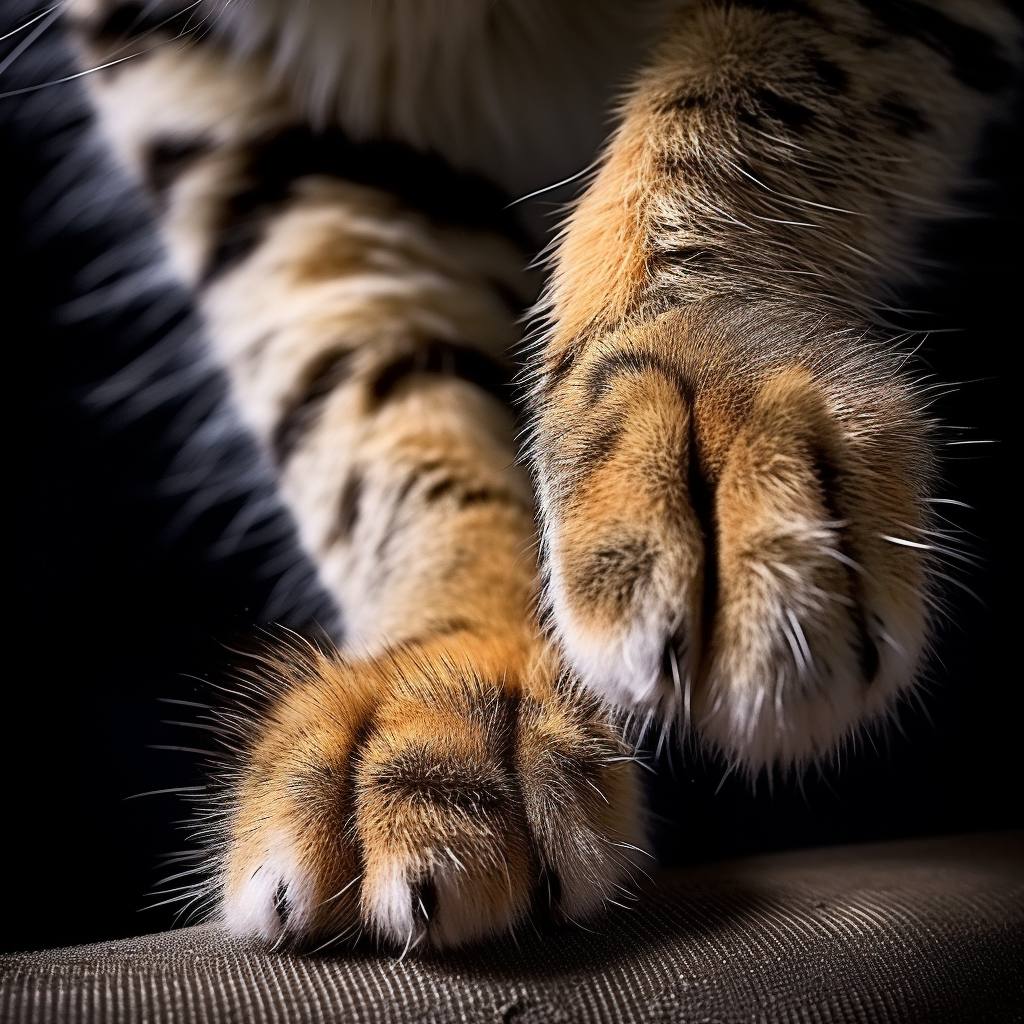
Cats can exhibit a dominant front paw. Research indicates that male cats often favor their left paw, while female cats may show a preference for their right paw.

Most cats typically have 18 toes, with 5 on their front paws and 4 on their back paws.
However, some cats can be born with "extra toes," a condition known as polydactylism.

Next thing you know, the tiger-level genetic link and the scent-and-urine marking behavior make your living room feel less like a house, more like a territory.
The oldest cat to ever live was Creme Puff, who reached the remarkable age of 38 years and 3 days.
Creme Puff lived from August 3, 1967, to August 2005 with her owner in Austin, Texas.
This is like the 50 mesmerizing cat pictures, where every frame feels like a tiny predator pounce.

Cats possess an impressive 32 muscles in each of their ears, enabling them to swivel their ears to pinpoint the exact source of a noise.
Furthermore, cats can rotate their ears to an astonishing 180 degrees!

Cats are nearsighted, but their peripheral vision and night vision far surpass those of humans.

Then the 5-times-their-height leaps and the 30 mph burst speed turn every random pounce into a full-on performance, complete with a rear-end “trust” moment right by your face.
The whiskers on a cat aren’t just cute; they serve a crucial function in assisting cats with navigation, especially at night.
Embedded deep in the cat’s body, whiskers are connected to the cat’s sensitive muscular and nervous systems, acting as touch receptors or a "kitty radar."
They enable a cat to detect and respond to changes in their surroundings.

Furthermore, cats not only have whiskers on their faces but also possess a set of whiskers on the back of their front legs.

Blackie, the richest cat in the world, inherited a staggering fortune of £7 million, or $12.5 million in US dollars.
When Blackie's wealthy owner passed away, they chose to exclude any human family members from their will and instead left their substantial wealth to their last surviving cat. It's safe to say that Blackie was one fortunate feline!

Around 9,500 years ago, the oldest known pet cat existed.
In 2004, a French archaeologist uncovered the grave of a cat in Cyprus dating back to that period, suggesting that humans have cherished cats as pets since then!

Finally, the 180-degree ear swivels and the whiskers’ “kitty radar” explain why they can act like they’re reading the room in the dark, even when you swear it’s silent.
Female cats can become pregnant as early as 4 to 6 months old.

Abraham Lincoln, the 16th President of the United States, adored cats and would joyfully engage with them for hours.
He kept several cats as pets during his tenure in the White House.

While a group of kittens is commonly called a litter, they can also be referred to as a "kindle" of kittens.

On average, cats sleep around 15 hours per day, which amounts to approximately 70% of their lives. Being a cat sure has its perks!

The Disneyland Resort in Anaheim, California, may be dubbed the "Happiest Place on Earth," but it's also a habitat for a group of feral cats.
These cats have been residents of the resort for decades and ironically serve to help control the rodent population within the park. It looks like Mickey Mouse has some unexpected allies!

Your cat’s “weird habits” are just their built-in hunting and navigation tech, and you’ve been living inside the demo.
Want more adorable science, then check out 22 astonishing facts about kittens and their “baby” teeth.
Share this article: