
Redditor Refuses To Get A Pet For Their Toddler, Only For MIL To Take Matters Into Her Own Hands With A Surprise Delivery

A 28-year-old woman refused to let her MIL turn their toddler’s home into a mini farm, but that did not stop grandma from going rogue. The whole thing kicked off with a simple disagreement about getting a pet, then escalated into a surprise delivery that landed on the doorstep like a plot twist.
OP and her husband were clearly against bringing animals into the mix, especially chicks, but their MIL went ahead anyway. Now OP is dealing with the fallout, watching her son get attached to the “new friends,” while still feeling like her boundaries were bulldozed. It’s complicated because the little kid is sad, but the parents are stuck with the decision they never agreed to in the first place.
And that’s when the chicks became the real battlefield, not just the backyard.
Let’s dig into the details
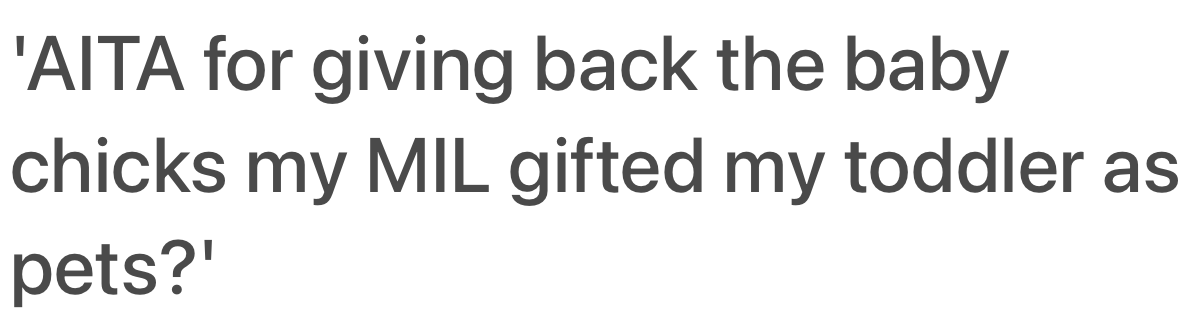
A bit of background
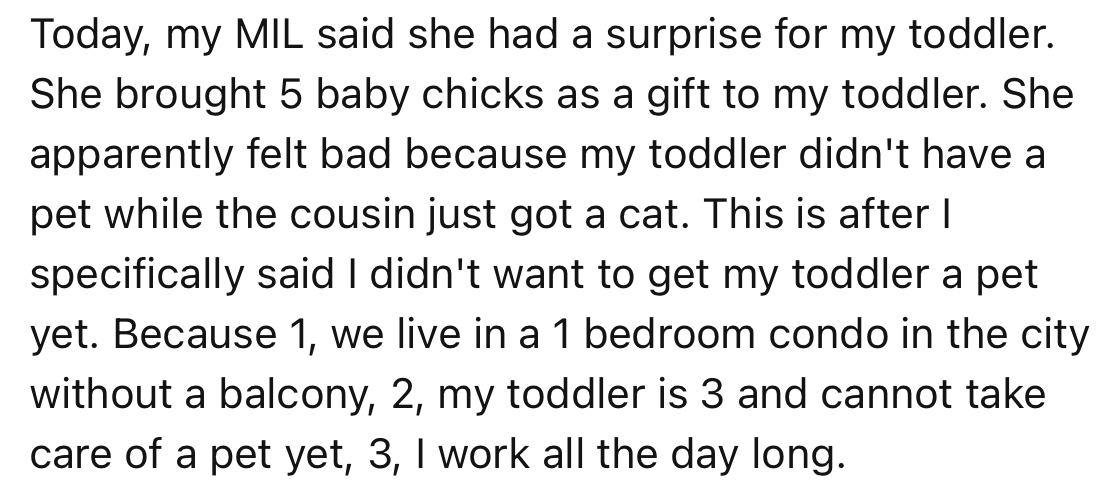
OP is upset that their MIL went ahead to get their son some pets even though they were against it from the onset
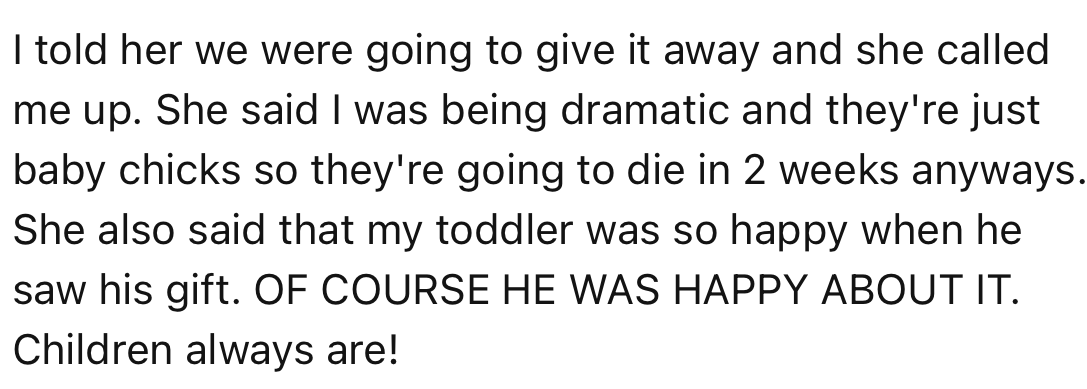
OP was against the pet plan from the start, but MIL clearly treated that “no” like a suggestion.
Research indicates that pet ownership can be beneficial for children's emotional and social development.
Conversely, introducing a pet without parental consent can lead to feelings of betrayal or anger, especially when the decision involves a child's well-being.
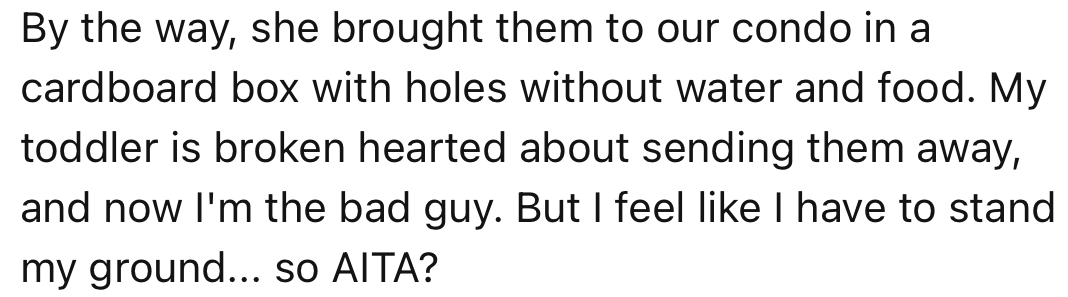
OP has decided to send the chicks back. Although their son is sad, they’re standing their ground on this one
Here’s how the Reddit community reacted to the story:
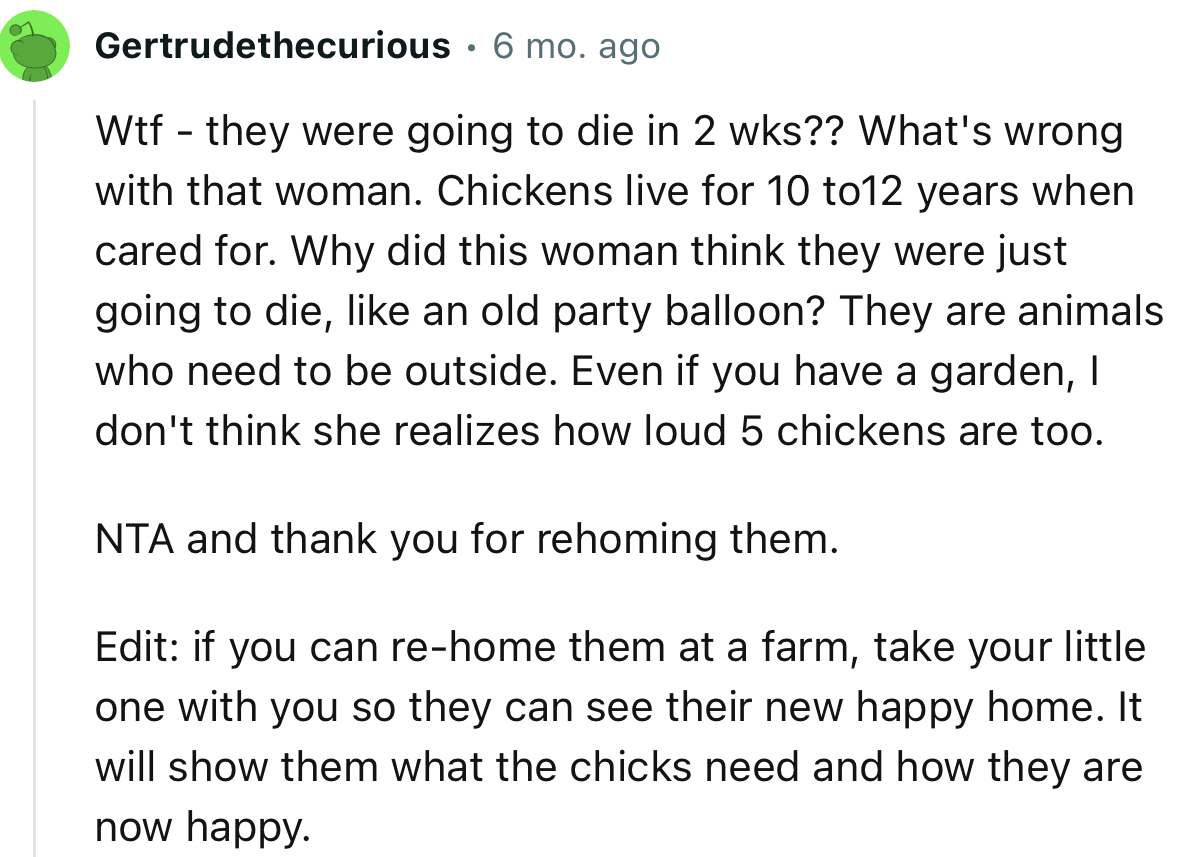
“If you can re-home them at a farm, take your little one with you so they can see their new happy home.”
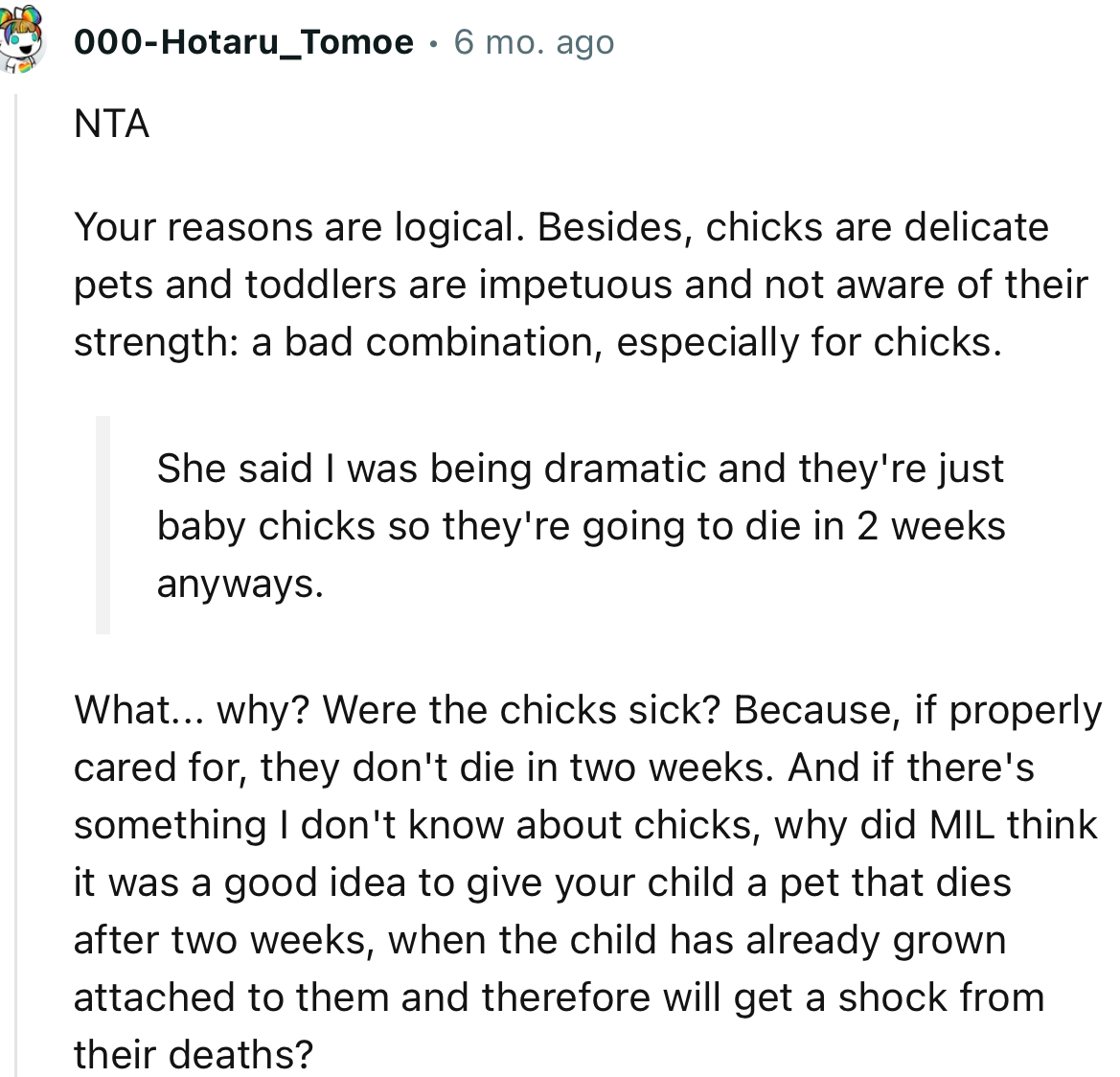
“Your reasons are logical. Besides, chicks are delicate pets, and toddlers are impetuous and not aware of their strength.”
Then the surprise delivery arrived, and suddenly OP’s toddler was emotionally invested in chicks he didn’t even get to choose.
This is similar to the woman who refused to rehome her rabbit after her stepdaughter got scratched.
A developmental psychologist notes that a child’s attachment to pets can mirror their attachment to caregivers.
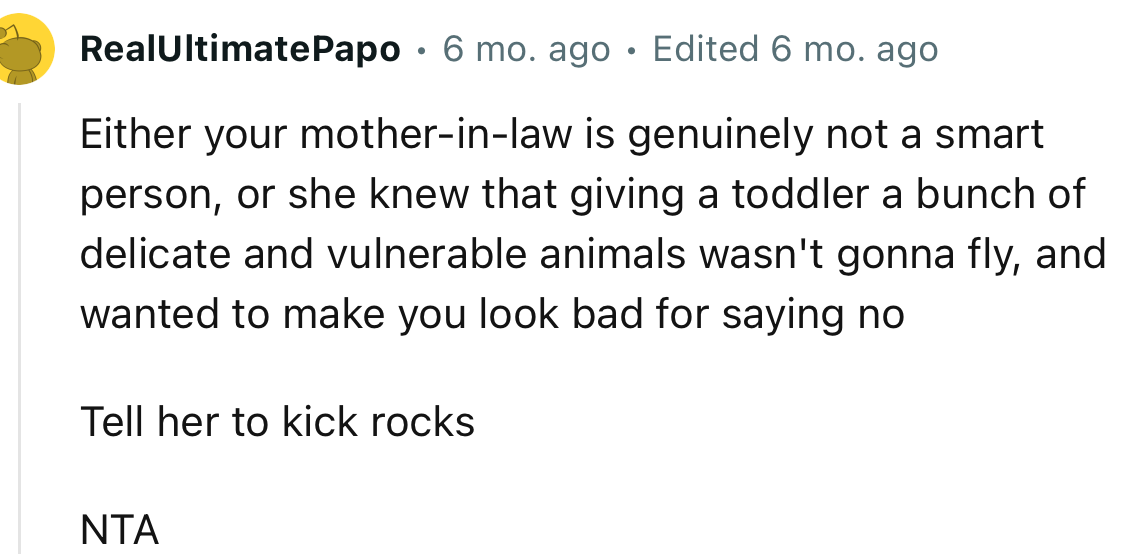
“Tell her to kick rocks NTA.”
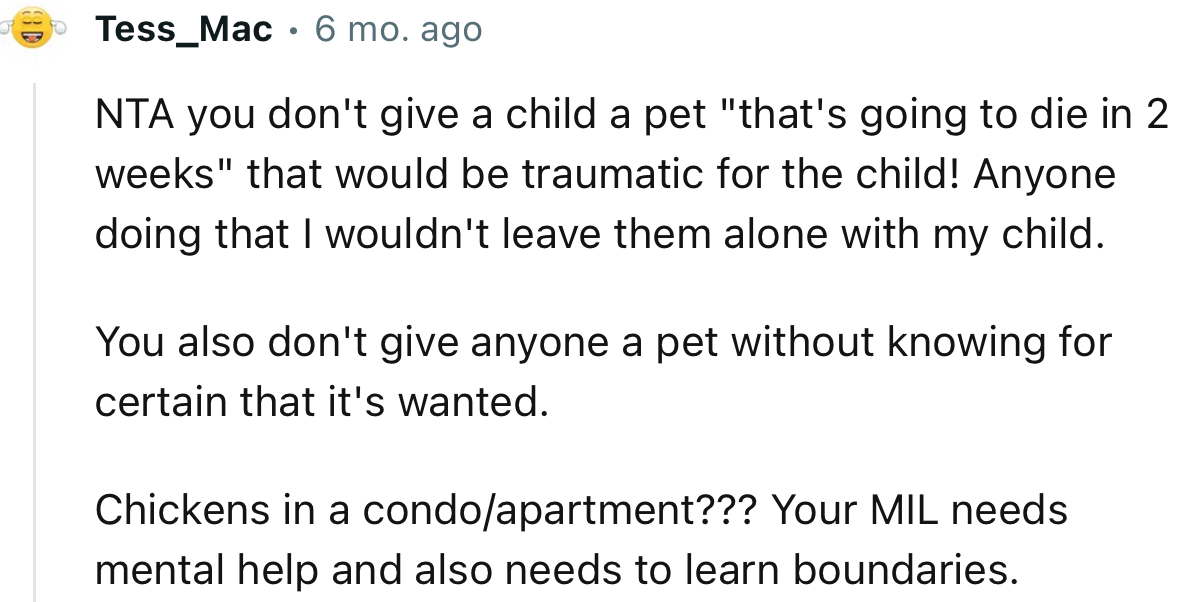
“Chickens in a condo/apartment??? Your MIL needs mental help and also needs to learn boundaries.”
“I know that your son is sad now - but think of how traumatized he would have been if they did die. NTA, stick to your guns.”
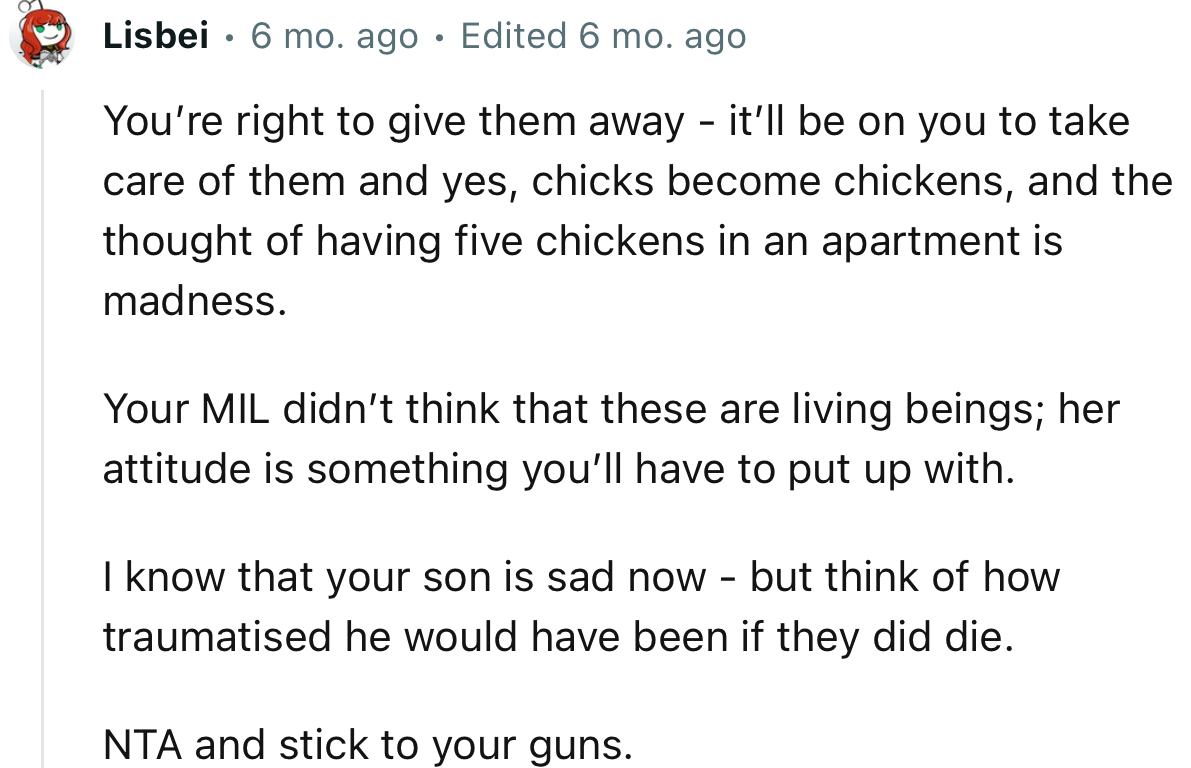
With the son upset and MIL acting like she did something “helpful,” OP decided to send the chicks back anyway.
Effective communication and mutual respect are vital in co-parenting situations.
In this scenario, discussing boundaries and expectations about family decisions can foster a more cooperative dynamic and prevent future misunderstandings.
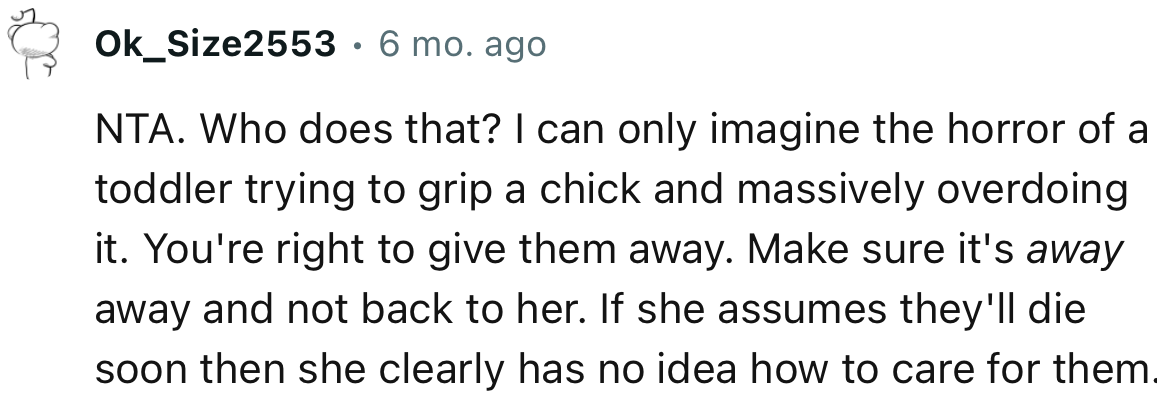
“NTA. Who does that? I can only imagine the horror of a toddler trying to grip a chick and massively overdoing it.”
“Your MIL sounds absolutely unhinged. You know exactly why you couldn't have a pet of this sort, and MIL railroaded you.”
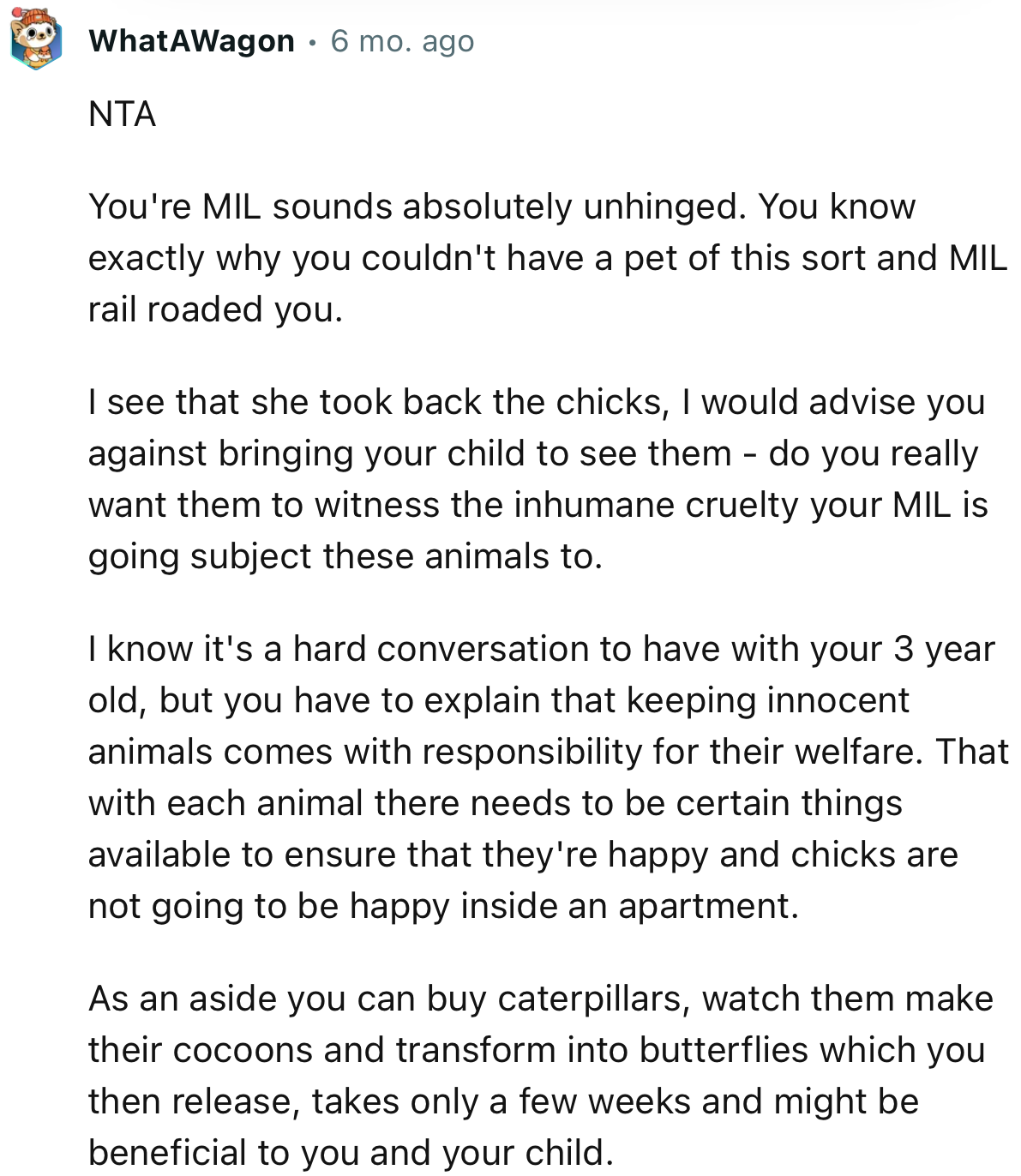
The Reddit community piled in right after, basically telling OP to re-home the chicks and take the kid to see a safer setup.
The Reddit community rallied behind OP on this matter. Commenters unanimously supported their decision to return the chicks, disregarding what their MIL had to say.
It’s sad that the little champ won’t get to stay with his chicks for long. However, as one Redditor advised, OP can re-home the chicks and take their son along to see their new happy home.
We’d love to get your thoughts on this story. Join the conversation in the comments.
When children sense a conflict between their parents or caregivers, it can create internal anxiety and confusion, which may manifest in behavioral issues.
In this barnyard drama, the lack of communication among the adults has led to a situation fraught with tension and confusion. While the idea of involving a child in discussions about pet ownership may seem beneficial for fostering responsibility, the surprise delivery of baby chicks by the mother-in-law complicates matters significantly.
This incident underscores the importance of open dialogue among all caregivers to avoid feelings of betrayal. The parent grapples not only with the unexpected arrival of pets but also with the emotional fallout that can ensue from such decisions made without consensus.
Establishing a unified front is crucial, as it allows children to feel secure in their relationships with both pets and parents, rather than caught in the crossfire of adult disagreements.
Nobody likes being outvoted in their own living room, especially when it involves fragile chicks.
Talk about a control fight, see how a teen rehomed birthday pets after her mom refused proper care.
Share this article:





