
Woman With Disabilities Asks If She Should Keep Her Dog Or If Rehoming It Would Be Kinder

A 6-7-month-old Husky/Labrador puppy can feel like pure magic, until life changes and the whole routine falls apart. In this Reddit post, OP is absolutely smitten with her pup, but everything gets tense when her husband is no longer around to help with the daily grind.
Now the dog is missing the proper exercise, and OP is doing her best, even with disabilities that make everything harder in ways other people might not see. She’s stuck between two painful truths: she loves the dog deeply, and she’s worried she might be shortchanging a high-energy puppy who needs more than good intentions.
So she turns to the internet, basically asking strangers to weigh in on a decision that feels impossible.
The Redditor recently shared her story explaining that she has a beautiful 6-7-month-old Husky/Labrador pup that she adores.
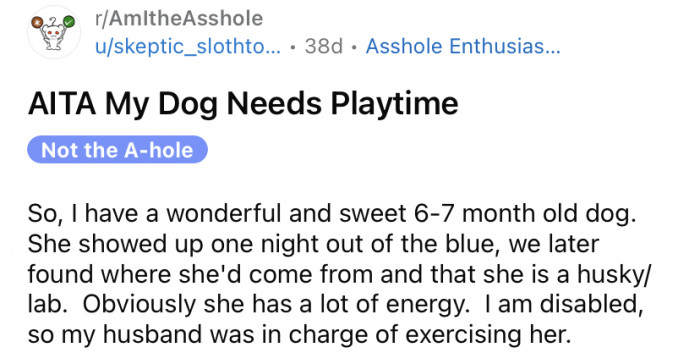
But now that OP's husband isn't around, the dog has been going without proper exercise.
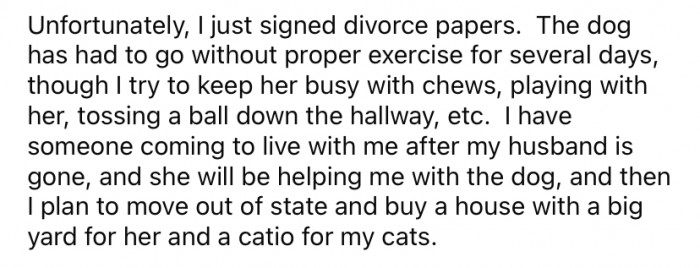
OP is trying her best but is worried that it isn't enough for the pup.

Attachment theory highlights the crucial role of emotional bonds between pets and their owners.
Research suggests that the bond between humans and their pets can trigger a release of oxytocin, often referred to as the 'love hormone'.
This attachment can be particularly strong for individuals with disabilities who may rely on their pets for companionship and emotional support.
She says she loves all of her animals very much, and they are not disposable to her.

The Redditor explained that she has become very attached to the dog, even though she never originally intended to adopt her.

She doesn't want to give up the dog but is worried that she is not doing the right thing by her.

OP’s attachment to the puppy, even though she “never originally intended to adopt her,” is exactly what makes the husband-less schedule so gutting.
Understanding this emotional impact is crucial for pet owners who may be considering rehoming. Thus, it is essential to carefully weigh the dog's needs against personal circumstances.
Pets can serve as vital components in an individual's mental health journey.
They often provide unconditional love and companionship, which can be particularly beneficial for those facing physical limitations.
Understanding this emotional reliance can empower pet owners to assess their situations more clearly, weighing the benefits of companionship against the responsibilities of pet care.
So, she asked the Reddit community for advice.

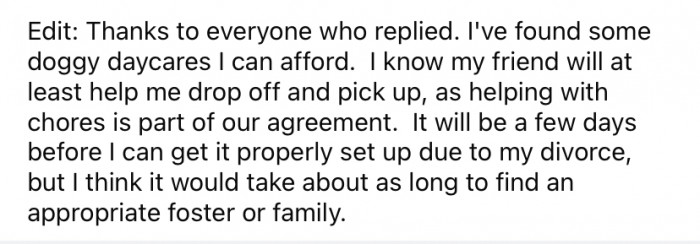
Later on, the OP posted an update thanking the community for all of their comments.
Here's how people reacted.

The moment OP realizes the pup has been going without proper exercise, the love hormone talk hits a lot more personally than it sounds.
This is similar to the woman who refused to give her eight-year-old dog back to its original owner.
Mental Health Benefits of Pet Ownership
Numerous studies have shown that pet ownership can significantly improve mental health outcomes. Research from Harvard Medical School indicates that companionship from animals can decrease feelings of loneliness and depression.
For individuals with disabilities, this companionship can be even more beneficial, fostering a sense of purpose and reducing stress. The presence of a pet can encourage physical activity and social interaction, both of which contribute positively to mental health.
Balancing Care Responsibilities
It's essential to recognize that while pets can offer significant emotional benefits, they also require considerable care and attention.
Research shows that pet ownership can lead to increased stress if the caregiver feels unable to meet the needs of the animal, potentially leading to feelings of guilt or inadequacy.
In light of this, pet owners should evaluate their capacity to provide the necessary care and support, perhaps seeking assistance from local animal welfare organizations or community resources.
"You obviously care a lot about the dog."
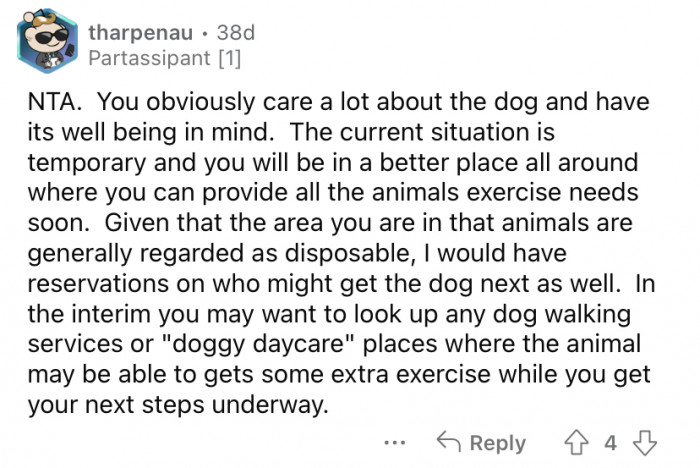
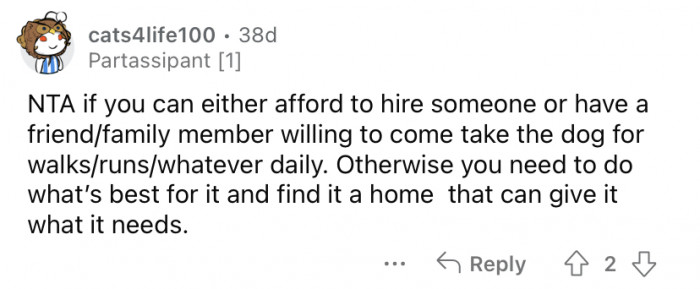
What about a dog-sitter?

"You have the dog's best interest at heart."

People start reacting to her “they are not disposable to me” line, because the dog’s needs are now colliding with her real-life limits.
Strong emotional connections are fundamental to human development. This principle extends to our relationships with pets, where the bond can fulfill emotional needs similar to those met by human relationships.
Asking whether to rehome a dog often reflects a deep inner conflict between the desire to maintain the bond and the fear of not being able to provide adequate care. Understanding this conflict can help clarify the decision-making process.
Making a pros and cons list can help clarify the situation, ensuring that the decision is made with a comprehensive understanding of emotional and practical implications.
Additionally, consulting with a mental health professional can provide insights into emotional attachments and how they align with one’s current life circumstances.
NTA.
"Do the right thing and surrender the dog."

But what about all the other dogs?

Practical Recommendations for Pet Owners
For pet owners facing such dilemmas, a few practical steps can help clarify their situation. Firstly, assessing the dog's needs versus the owner's capabilities is essential. This may include consulting with a veterinarian or a pet behaviorist to understand the dog's emotional and physical needs better.
Additionally, considering temporary support options, such as pet sitters or dog walkers, can alleviate some pressure while allowing the owner to maintain the bond without feeling overwhelmed. Joining support groups for pet owners can also provide emotional assistance and shared experiences.
By the time OP posts the update thanking everyone for their comments, the thread has basically turned into a debate over what kindness actually looks like for this specific husky-lab.</p>
Research indicates that social support plays a crucial role in managing the responsibilities associated with pet ownership.
Studies have shown that individuals who engage their support networks when facing challenges tend to cope more effectively.
Encouraging open communication about the struggles of pet care with family, friends, or support groups can lead to shared resources and practical help, alleviating some of the burdens associated with pet ownership.
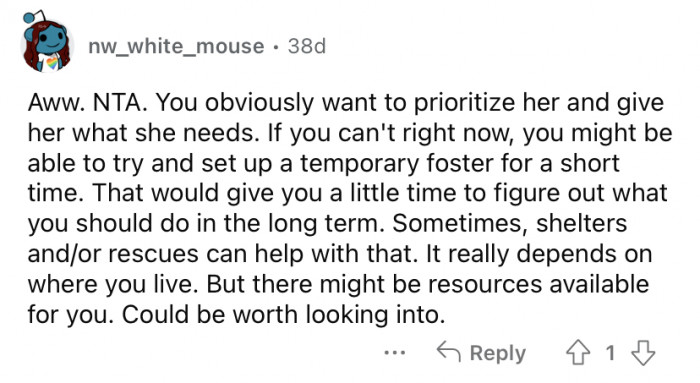
Temporary foster care could be an option.
Might want to check your attitude!

What's your take on this situation? Do you think what the OP is doing is enough for the dog, or is she being selfish if she doesn't rehome her?
Either way, it's obvious that OP loves the dog very much and only wants the best for her. We hope that both OP and her dog get the happy lives they both deserve.
We would love to hear your opinions on this. You can share your thoughts with us in the comment section.
Ultimately, the decision to keep or rehome a pet should be made with careful consideration of both the emotional and practical aspects of pet ownership.
Research indicates that making informed choices and recognizing one’s limits can lead to better outcomes for both the individual and the pet.
Seeking guidance from veterinarians or animal behaviorists can also help in assessing the pet's needs and the owner's ability to meet them.
The situation faced by the Reddit user highlights the complex interplay between emotional attachment and practical care in pet ownership. While the joy and companionship a pet brings can be immeasurable, the ability to provide adequate support is paramount. This dilemma resonates deeply with many who find themselves in similar circumstances.
Understanding personal limitations, as illustrated in her story, is vital for making informed decisions about pet care. The emotional toll of rehoming a beloved animal can be significant, yet it may also be the most compassionate choice for both the pet and the owner.
Fortunately, various resources exist to assist individuals in navigating these tough decisions, emphasizing the importance of finding a balance that ensures both the pet's well-being and the owner's capacity to care for them.
It's important to remember that every individual's situation is unique.
The dilemma faced by the Reddit user highlights the intricate balance between personal capability and the welfare of a beloved pet. The heart-wrenching choice of whether to keep or rehome a dog demands deep introspection and empathy. It is crucial to prioritize the emotional well-being of both the owner and the pet. This situation underscores the importance of recognizing when love alone is insufficient to meet the needs of a pet. The journey toward making this decision requires not only careful thought but also the support of a community that understands the weight of such a choice. By thoughtfully evaluating their circumstances, individuals can hopefully arrive at a resolution that honors the bond they share while ensuring the best outcome for their furry companions.
Her whole question is simple, but the answer is going to hurt either way.
Wait until you see the pregnant woman who tried to rehome her friend’s dog after abandonment rumors.
Share this article:





