16 Types of Canaries, From Song Breeds to Color and Type Canaries

Types of canaries are usually grouped into song canaries, type canaries, and color canaries. Those categories describe the feature breeders selected most strongly, not three separate species. A Gloster may be judged by shape, a Harz Roller by song, and a red-factor canary by plumage.
All domestic varieties descend mainly from the Atlantic Canary, Serinus canaria. One species. Many directions.
How canary types are classified
Scientific reviews describe domestic canary strains selected for posture and body form, song, or color. One recent overview notes roughly 30 recognized breeds or strains across those groups, including Border, Fife, Gloster, Yorkshire, Malinois Waterslager, Harz Roller, and color-defined lines. See the canary breeding overview in the National Library of Medicine.
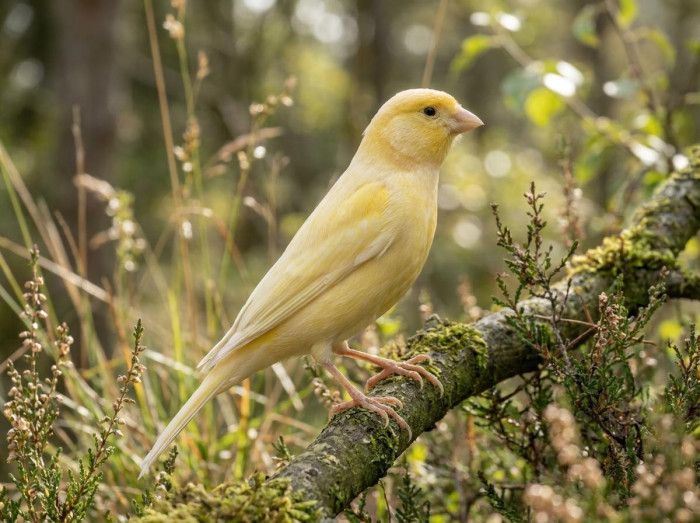
The wild Atlantic Canary profile from Animal Diversity Web provides the starting point: a small finch with yellow-green and brown plumage, quite different from the clean yellow bird many people picture.
Song canaries
List:
1. Harz Roller
The Harz Roller is bred for a soft, low, rolling song often delivered with the beak mostly closed. Its music is restrained rather than piercing. Appearance varies because song quality is the central standard.

2. Belgian Waterslager
Waterslagers produce liquid, bubbling notes that give the breed its water-song name. The body is usually yellow and slightly forward-leaning. The song can sound louder and more metallic than a Roller’s.

3. Spanish Timbrado
This breed is known for a bright, ringing song with clear metallic notes. Many Timbrados retain a green, yellow, or variegated appearance close to the wild-type canary. Sound, not a fixed color, defines the variety.

4. American Singer
American Singers were developed to combine the Roller’s softer notes with a broader, more varied performance. They may sing with open and closed beak passages. Show standards balance song quality with a tidy body form.
5. Russian Singer
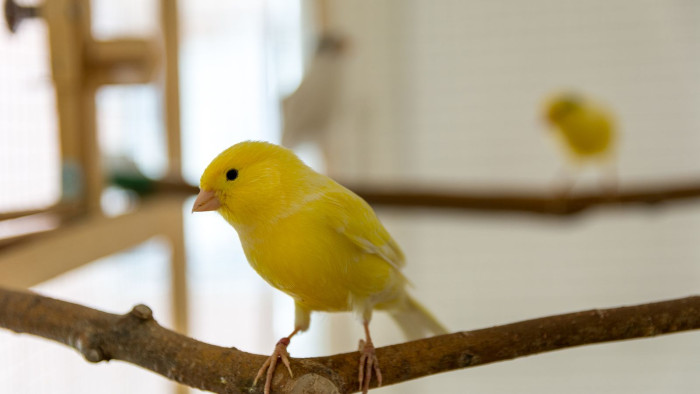
Russian Singers were selected for high, flute-like phrases and trained repertoires that could imitate local songbirds. Their history reflects a period when a caged bird brought countryside sound into urban rooms.
Type canaries bred for body shape
List:
6. Gloster canary
Glosters are small and rounded. The Corona form carries a circular crest that falls around the head, while the Consort has a smooth crown. Pupperish’s Gloster Canary with a bowl-cut crest shows why this breed is recognized by silhouette before color.

7. Border Fancy
The Border Fancy has a rounded body, smooth head, and balanced upright stance. Breeders often describe an egg-shaped outline. Yellow is common, but color is secondary to proportion.
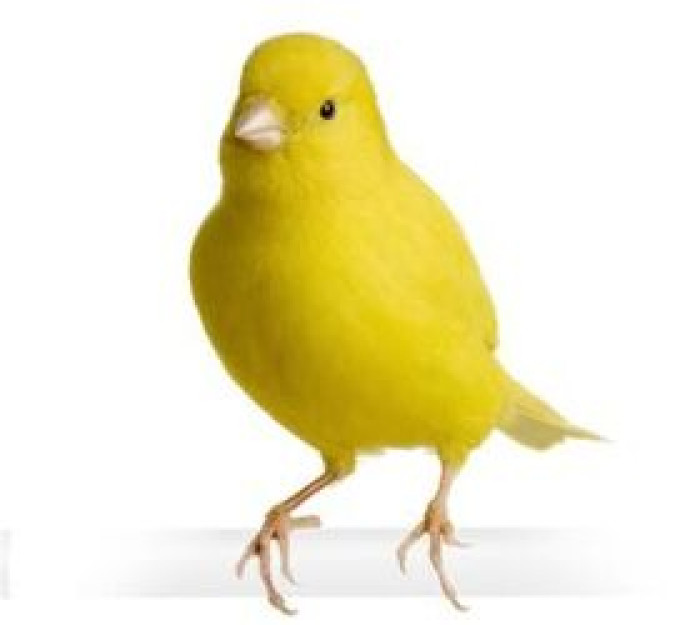
8. Fife Fancy
A Fife Fancy resembles a smaller Border. It is compact, lively, and neatly rounded without looking heavy. The reduced size is deliberate, not a juvenile stage.
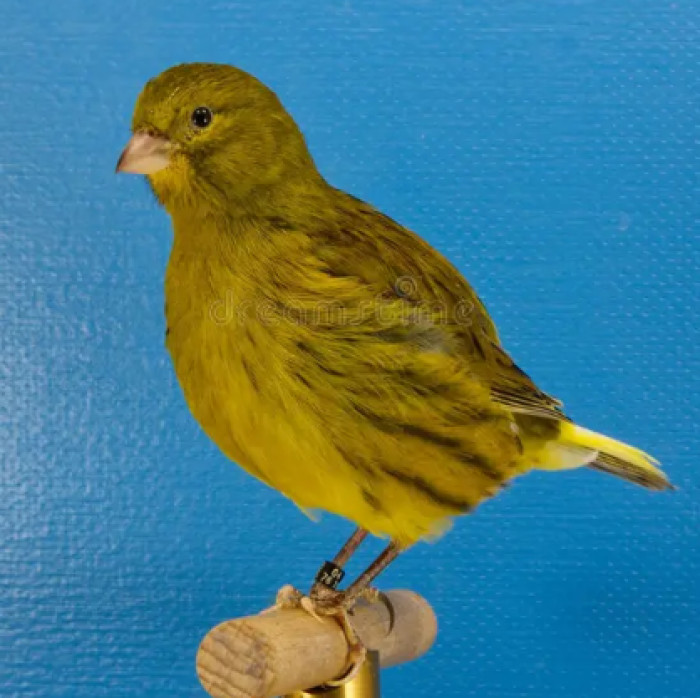
9. Yorkshire canary
Yorkshires are tall, slim, and upright, with long legs and a tapered body. The posture is almost vertical. A side-by-side comparison with a Gloster makes the difference immediate.
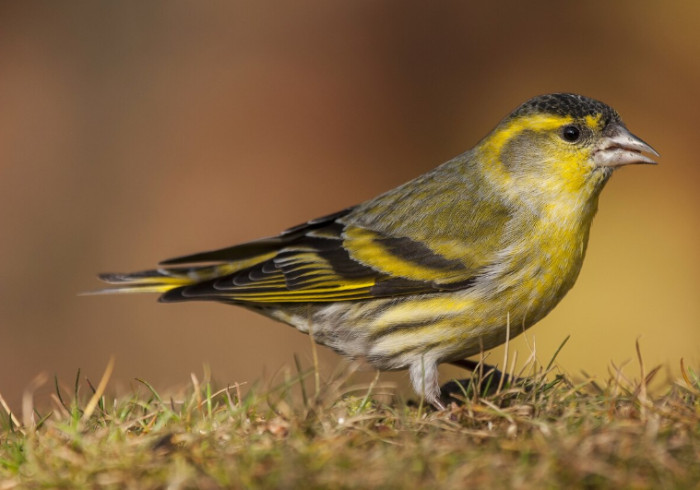
10. Norwich canary
Norwich canaries are broad, stocky, and heavily feathered, with a large rounded head. They look substantial for a small songbird. The body is shorter and fuller than a Yorkshire’s.
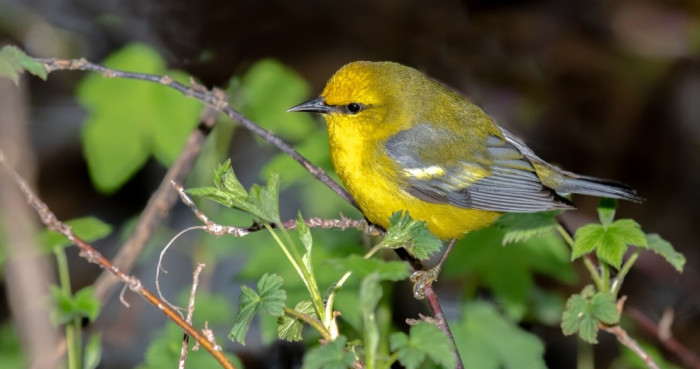
11. Lancashire canary
This large type canary is known for length and, in the crested form, a horseshoe-shaped cap of feathers. The breed contributed to the development of other crested canaries. Size and crown structure carry more weight than plumage color.
12. Gibber Italicus
The Gibber Italicus has a thin body, bent posture, long legs, and sparse-looking feather placement. It is one of the most extreme examples of selective breeding for form. Its outline can surprise readers expecting a round yellow canary.

Color canaries
List:
13. Yellow lipochrome
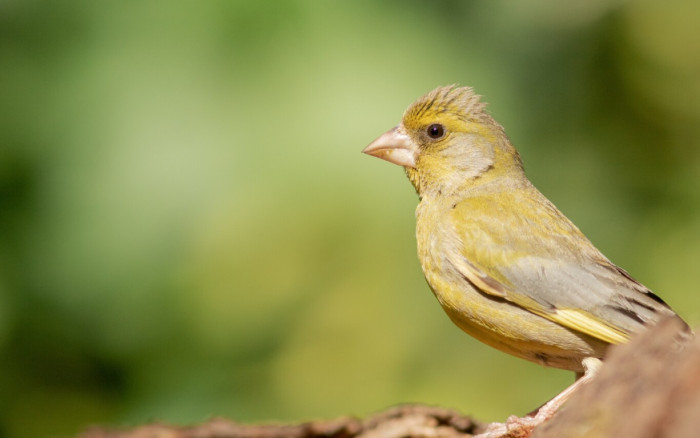
Yellow lipochrome canaries lack dark melanin markings, leaving a clean yellow body. Feather intensity can vary, but the smooth single-color look separates them from wild-type green canaries and many little brown birds with streaked backs.
14. Red-factor canary
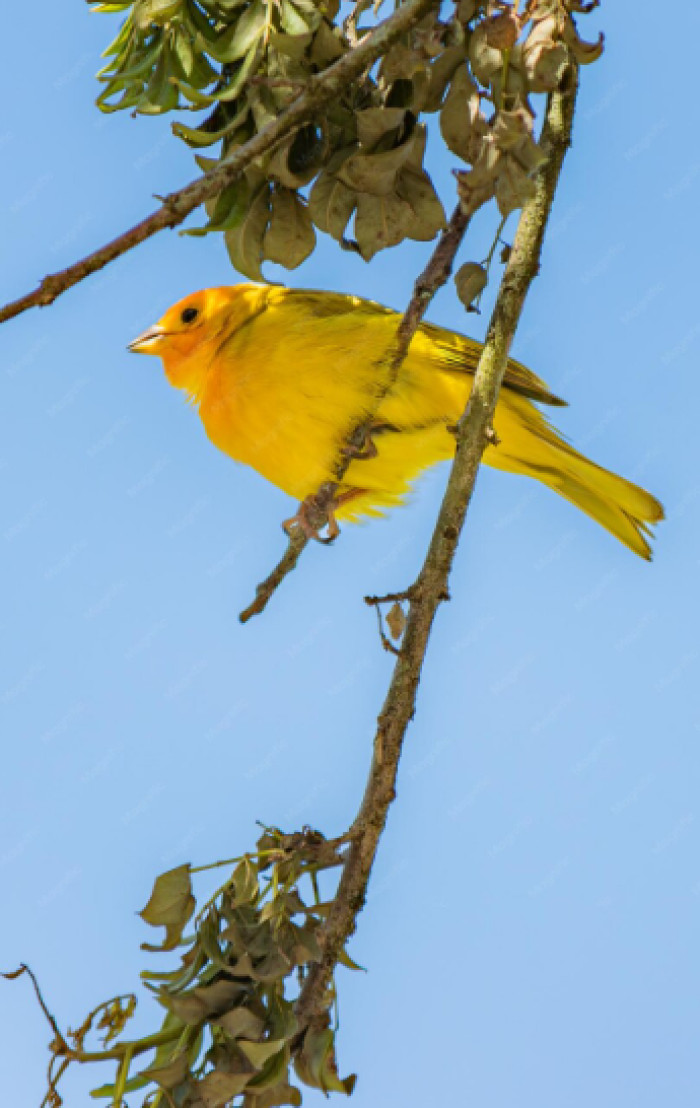
Red-factor canaries were developed through historic hybridization with the Red Siskin, followed by selective breeding. Their plumage ranges from orange-red to deep red depending on genetics, feather type, and diet. Related red finches can look similar at a glance, including the bird in Pupperish’s flying strawberry finch profile.

15. White canary
White canaries may be dominant white or recessive white. Dominant whites usually retain a small trace of yellow in the flight feathers, while recessive whites can appear completely white. A color-first search may place them beside wild white birds, but body shape and captive context make the difference clear.

16. Mosaic and melanin color canaries
Mosaic canaries concentrate color in defined areas such as the face, shoulders, and rump. Melanin varieties add dark brown, black, gray, or patterned pigment over a yellow, white, or red ground color. A recent pigmentation study compares wild-type Atlantic Canaries with domestic lipochrome and melanin-loss lines.
Canary, finch, or another yellow bird?
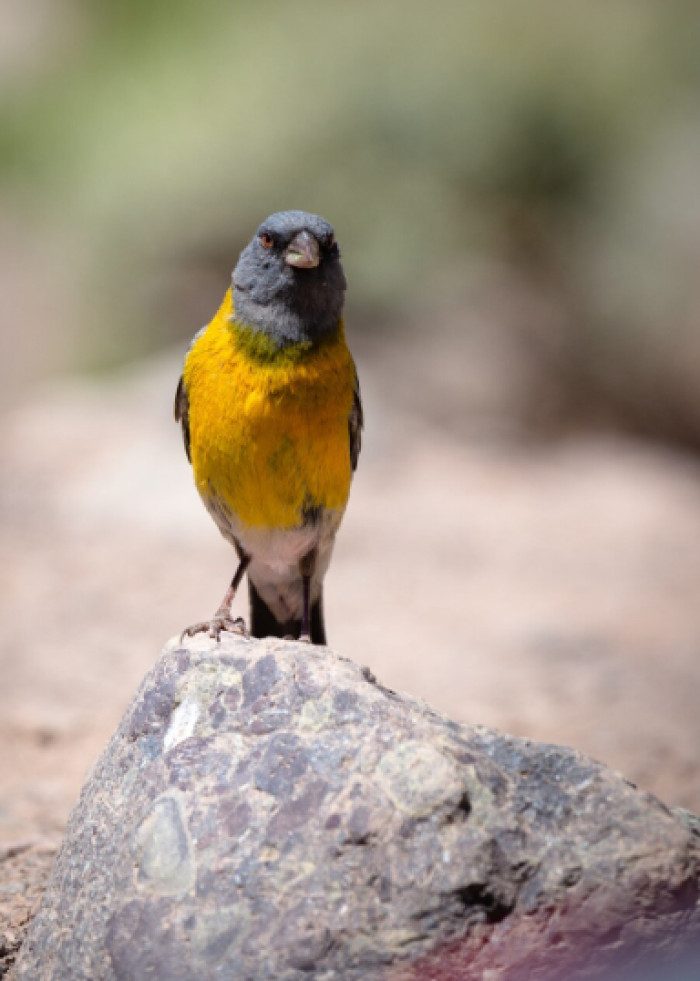
Canaries are true finches, but canary is not a general name for every small yellow seed-eater. Rosefinches, siskins, goldfinches, and waxbills belong to related or neighboring groups. Pupperish profiles show how wide that visual range becomes, from a pink-browed rosefinch to the subdued Vampire Finch.
A domestic canary may share a pointed bill and compact body with wild backyard birds, but behavior and setting matter. Escaped cage birds should not be identified only by bright color. Likewise, red coloration does not make a canary one of the types of cardinals.
- Choose song canaries by listening style and training history.
- Choose type canaries by outline, posture, crest, and size.
- Choose color canaries by pigment pattern and feather intensity.
- Confirm the bird is a domestic canary before assigning a breed.
The best canary label answers the right question. Is the bird valued for what it sings, how it is built, or where its color appears? Start there, and the long breed list becomes manageable.
Share this article: