
15 Rare Amazon Rainforest Animals Hiding in Plain Sight

It’s easy to think the Amazon is all big, obvious animals. Then a camera trap clicks, a river turns pink for a second, and suddenly you’re watching creatures that most people never realize are there.
In this rainforest, sightings are a game of hide-and-seek with muddy water, dense canopy, and habitats that change every season. A short-eared dog slips through upland forest and floodplain like it’s following invisible shortcuts. A Vanzolini bald-faced saki sat in old museum drawers for decades, until the western Amazon finally proved it was still alive. Meanwhile, giant otters bark and glare along rivers, and the Amazon river dolphin vanishes and reappears as branches crowd the current.
And that’s just the warm-up for the animals that are literally hiding in plain sight.
1. Short-Eared Dog
The short-eared dog is a forest canid with small rounded ears, a long snout, and a dark coat. Camera traps record it far more often than people see it directly.
It moves through several Amazon habitats, including upland forest, floodplain, and areas near rivers. Much about its social behavior and population remains uncertain.

2. Vanzolini Bald-Faced Saki
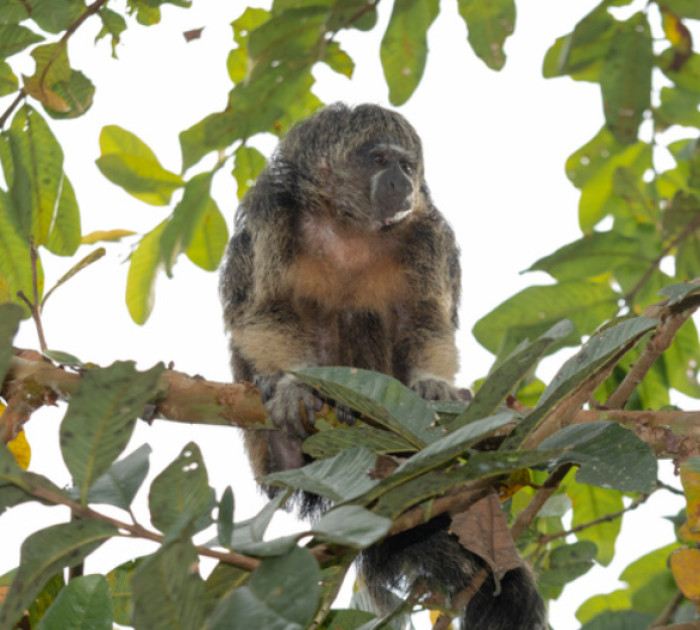
The Vanzolini bald-faced saki was known mainly from old museum specimens before researchers confirmed living animals in the western Amazon. It has a dark body, a bare face, and a thick tail.
That rediscovery drew attention because the monkey had gone unrecorded for decades. Pupperish covered the moment the supposedly lost monkey was found alive.
3. Giant Otter
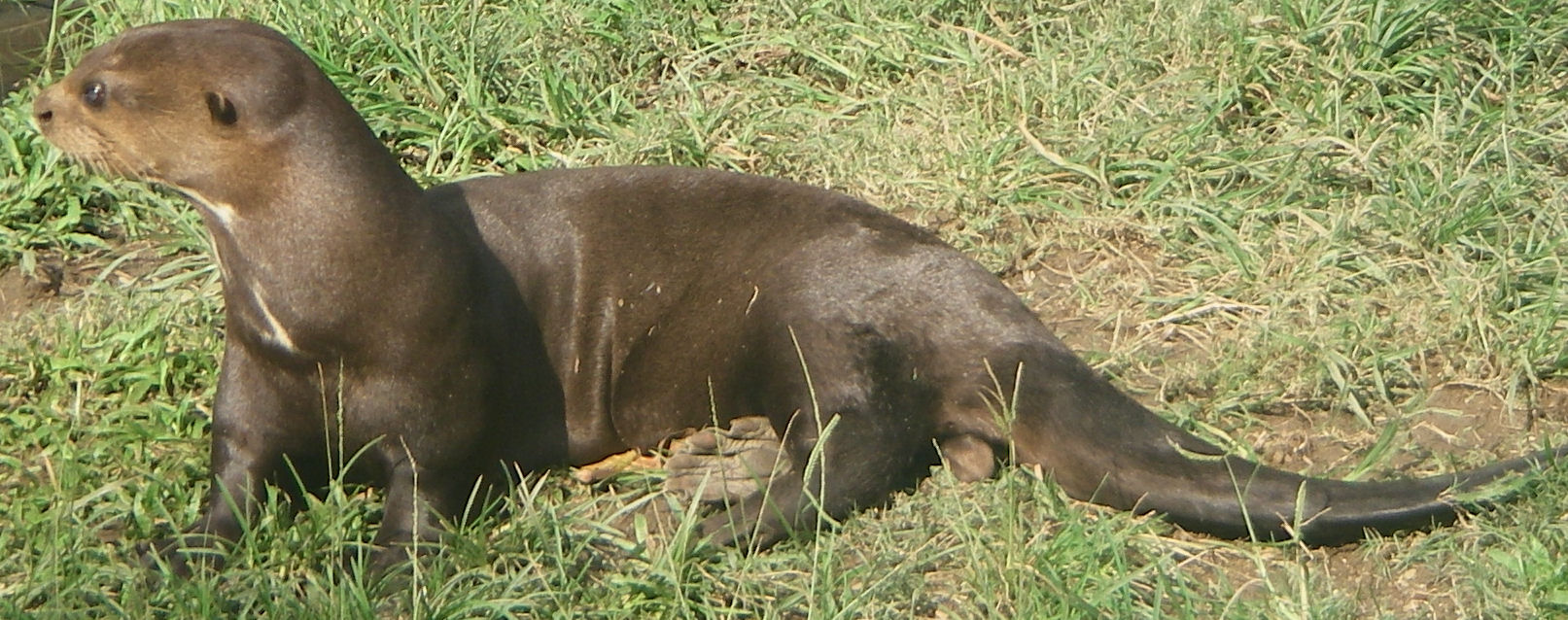
Giant otters are the largest members of the weasel family and live in social groups along rivers and lakes. White markings on the throat differ between individuals, helping researchers identify them.
They are loud, territorial, and highly visible when a family group appears. Yet habitat loss, hunting history, and disturbance have left them absent from many former areas.
4. Amazon River Dolphin
The Amazon river dolphin, often called the pink river dolphin, moves through rivers and seasonally flooded forests. Its flexible neck helps it turn among submerged branches.
Color varies with age, sex, and activity. Some adults become strongly pink, while others remain mostly gray. Seeing one clearly in dark river water can take patience.

5. Amazonian Manatee
Amazonian manatees live entirely in freshwater and feed on aquatic plants. Their dark bodies often have pale markings on the belly.
They are quiet and difficult to detect in muddy water. Hunting and accidental capture in fishing gear have affected populations, while slow reproduction makes recovery difficult.

6. Harpy Eagle
Harpy eagles are among the largest and most powerful forest raptors in the Americas. They nest in tall canopy trees and hunt animals such as sloths and monkeys.
Their size does not make them easy to spot. Dense leaves hide even a large bird. Photographs of the harpy eagle often surprise readers because its upright posture looks almost human.

7. Red-Faced Uakari
The red-faced uakari has a short tail, long body hair, and a bare red face. It lives in flooded forest and spends much of its time moving through the canopy.
The vivid face is normal, not a sign of sunburn. Researchers have linked stronger coloration with health and condition, though the exact signals can vary.

8. South American Tapir
The South American tapir is a large plant-eating mammal with a short flexible snout. It travels through dense forest more easily than its heavy body suggests and often uses water for cooling and escape.
Tapirs reproduce slowly. Habitat loss and hunting can therefore remove animals faster than a local population replaces them.

Camera-trap mystery lovers will get a kick out of these tiny, almost-imaginary sea creatures with mismatched, cute faces.
9. Jaguar
Jaguars occupy a wide range of South American habitats, but the Amazon remains one of their major strongholds. Each animal has a unique rosette pattern that camera-trap teams can use for identification.
A jaguar can swim, climb, and hunt prey from turtles to capybaras. It is powerful enough to be famous, yet quiet enough to pass close by without being seen.

10. Green Anaconda
Green anacondas live in swamps, slow rivers, and flooded grasslands. Their size attracts exaggerated stories, but the real animal needs no extra promotion.
Females are much larger than males and can overpower substantial prey. A close diver and anaconda encounter shows how calm the snake may appear when it does not feel threatened.

11. Giant Armadillo
The giant armadillo is the largest living armadillo, with heavy claws used to open termite mounds and dig burrows. It is mostly nocturnal and travels across large areas.
Camera traps provide many of the best records. Its burrows also create shelter used by other animals, giving the species an ecological role beyond its own survival.

12. White-Bellied Spider Monkey
White-bellied spider monkeys move through the upper canopy with long limbs and a prehensile tail. They depend heavily on mature forest and fruiting trees.
That dependence creates a problem when roads and clearing divide the canopy. A gap that seems small from the ground can break a regular feeding route high above it.

13. Arapaima
Arapaima are enormous freshwater fish that must surface to breathe air. The behavior makes them easier to locate than many Amazon fish, but it also exposes them to fishers.
They inhabit floodplain lakes and slow-moving water. Local management programs have shown that protected breeding and controlled harvests can support recovery.

14. Black Caiman
The black caiman is a large crocodilian and a major predator in Amazon waterways. Young animals face many predators, while large adults can take fish, birds, and mammals.
At night, reflected light from the eyes can reveal an animal that was invisible seconds earlier. Dark water does most of the camouflage.

15. Poison Dart Frogs
The Amazon contains many brightly colored frogs, including species commonly grouped under the name poison dart frogs. Their skin chemicals and color patterns vary widely.
Not every colorful frog is equally toxic. Diet plays a major role, and captive animals can lose much of their toxicity when they no longer eat the same wild prey.

That short-eared dog is caught more often than humans ever manage to see it, so the “rare” part feels weirdly personal.
Then the Vanzolini bald-faced saki flips the whole story, because it was basically treated like a ghost until someone confirmed it walking around.
After that, the giant otter makes it even more confusing, loud and territorial, yet still absent from places it used to live.
And once you picture the Amazon river dolphin turning shades of pink in dark, branch-choked water, the whole list starts to feel like a scavenger hunt you can’t win in one try.
Why Are Amazon Animals So Hard to Find?
The Amazon is layered vertically. River animals, ground mammals, understory birds, canopy primates, and insects can occupy the same patch of forest without sharing the same visible space.
Then the water rises.
Seasonal flooding changes feeding routes and gives fish access to forest that was dry months earlier. A species may be present but temporarily unreachable to researchers.
That complexity explains why general lists of rainforest animals contain only a fraction of the real inventory. Even collections of bizarre Amazon wildlife barely touch the smaller insects, fish, and nocturnal mammals.
The same pattern appears in other isolated ecosystems. Socotra Island animals are rare because geography kept populations apart, while many rare Australian animals evolved under a different kind of isolation. Some of the Amazon’s smaller mammals also belong naturally among cute rare animals, although their survival depends on far more than appearance.
Almost nothing is easy to see.
A camera trap may wait for months, a boat survey may cover only one seasonal channel, and a canopy team may hear an animal repeatedly without getting the photograph needed to confirm its identity.
Then the forest closes again.
The Amazon doesn’t just hide animals, it hides the evidence that you were ever looking in the right place.
Want more stealth sightings, from glass-headed fish to living ribbons of light, check out these rare sea animals most people never see.
Share this article:





