Birds of Madagascar: 16 Endemic and Unusual Species From the Island

Madagascar is the kind of place that makes evolution look like it got bored and started remixing everything. While mainland birds often share the same basic body plans, this island has its own rulebook, and the results are wild.
Some species look like they were built for a very specific job. A Helmet Vanga shows up with a comically oversized bill, a Madagascar Jacana spreads its weight with extra-long toes across floating plants, and couas move like ground-hunting ghosts in forest shade. Even the “normal” ones come with island twists, like males turning blazing red in breeding season or tail feathers stretching into pure drama.
Here are 16 endemic and unusual birds that prove Madagascar did not just keep birds, it redesigned them.
16 birds in Madagascar that show its endemism
List:
1. Crested Coua.
Crested Couas are large cuckoo relatives with a gray crest, blue bare skin around the eye, and a long tail. They move through forest and woodland on the ground and in low branches. Unlike many famous cuckoos, couas raise their own chicks.

2. Blue Vanga.
The Blue Vanga has blue upperparts, pale underparts, and a black mask. It occurs in native forests across much of Madagascar. Vangas are especially important because the group diversified into birds with very different bills and feeding strategies.

3. Helmet Vanga.
One of the strangest vangas, the Helmet Vanga has a huge blue bill and bright blue head. It lives in humid northeastern rainforest. The shape looks excessive until you remember that island radiations often push related birds into very different feeding niches.

4. Sickle-billed Vanga.
A long curved bill gives this vanga a silhouette unlike its relatives. It uses the bill to probe bark and crevices for prey, filling a role more like a wood-probing specialist than a generic songbird.

5. Madagascar Paradise Flycatcher.
Males can have extremely long tail feathers, while females are shorter-tailed and rufous. The species uses forest and woodland and catches insects from exposed perches.

6. Madagascar Fody.
Breeding males become bright red over much of the head and body, while females and nonbreeding males are much duller. The bird is common in open habitats, agricultural areas, and settlements.

7. Madagascar Hoopoe.
This island hoopoe has a long curved bill and a crest that can be raised like a fan. It forages on the ground for insects and other small prey.

8. Madagascar Jacana.
The Madagascar Jacana is endemic to the island and has long toes suited to walking across floating vegetation. It is associated with freshwater wetlands, especially in western and northern regions.

9. Cuckoo-roller.
The Cuckoo-roller is so distinctive that it sits in its own family. It has a large head, gray-brown plumage, and a broad tail, and it lives in forest from low elevations into mountains.

Madagascar’s forest birds feel similar to the Andes, Amazon, and Patagonia species in South American Birds: 18 Species From the Andes, Amazon, and Patagonia.
10. Velvet Asity.
Male Velvet Asities are mostly black with bright green facial wattles. They are small forest birds and part of another group strongly associated with Madagascar.

11. Schlegel's Asity.
This compact bird has a short tail and, in adult males, vivid blue-green facial skin. It occurs in dry western forests rather than the humid east.

12. Madagascar Pygmy Kingfisher.
Tiny and bright, this kingfisher has orange-red upperparts, white underparts, and a dark bill. It often hunts small prey from low perches in forest.

13. Madagascar Fish Eagle.
One of the island's rarest large raptors, the Madagascar Fish Eagle is tied to western coastal and freshwater systems. Its low population makes conservation of nesting and feeding habitat particularly important.

14. Greater Vasa Parrot.
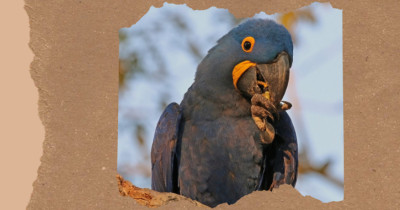
Greater Vasa Parrots are dark gray rather than green, with long necks and an almost prehistoric profile. Parrots can live for decades in captivity, which is why disputes involving a 30-year-old pet parrot sound plausible, but wild vasa parrots belong to a very different ecological story.

15. Madagascar Nightjar.
A mottled gray-brown nightjar that spends daylight camouflaged against ground or branches. At night it hunts flying insects. The plumage works because it looks like texture, not like a colorful bird.

16. Madagascar Partridge.
This ground bird occurs in open grassland, scrub, and agricultural areas. Its warm brown patterned plumage is far less dramatic than a vanga, but it is part of the island's native bird community and easy to overlook in color-focused lists.

Once you spot the Crested Coua strutting through low branches, you start noticing how many of these birds are built for specific, island-only moves.
Then the vangas kick in, with the Blue Vanga’s bill variety and the Helmet Vanga’s oversized headgear making you rethink what “feeding strategy” even means.
After that, the Madagascar Paradise Flycatcher’s long-tailed male show and the fody’s breeding glow-up feel like the island’s version of a seasonal costume party.
Finally, the Madagascar Jacana’s floating-plant life, plus the Cuckoo-roller’s own-family weirdness, makes it clear Madagascar endemism is not a small detail, it is the whole plot.
Why Madagascar has so many endemic birds
Ocean isolation limits gene flow. Over long periods, populations can diverge from relatives elsewhere, while groups that reach the island may diversify into open ecological roles. Madagascar's vangas are the classic bird example.
The same isolation shaped other wildlife. Pupperish has featured Madagascar's leaf-tailed geckos and another leaf-mimicking gecko, animals that show how forest camouflage evolved along very different branches of the tree of life.
Birds of Madagascar by habitat
- Eastern humid forest: Helmet Vanga, many couas, asities, forest flycatchers, and ground-rollers.
- Western dry forest: Schlegel's Asity, vangas, mesites, and dry-forest specialists.
- Wetlands and coasts: Madagascar Jacana, herons, ducks, shorebirds, and Madagascar Fish Eagle.
- Open country and farms: Madagascar Fody, Madagascar Partridge, larks, kestrels, and introduced species.
The island's forest birds fit naturally beside rainforest birds, but Madagascar should not be collapsed into a generic tropical list. The species history is too distinctive.
Island birds evolve in unexpected directions
Madagascar is not the only island system where bird evolution took unusual turns. The common birds of Japan show a much more temperate and human-shaped island fauna, while birds of Iceland are dominated by North Atlantic seabirds and migrants.
Odd nesting strategies appear on islands too. The Indonesian Maleo, covered by Pupperish for burying its eggs underground, evolved on a different island system but makes the same point: geographic isolation can produce very unusual solutions.
Bird classification itself can also change as new evidence arrives. Pupperish has covered a rare swallow known from a single old record, a useful example of how species lists are not frozen forever.
Sources: Avibase: Madagascar checklist | BirdLife: Madagascar factsheet
Madagascar’s birds are so different, you almost forget the island is the same place.
Madagascar’s endemics are wild, but wait until you see the Socotra animals found nowhere else.
Share this article: