Common Birds in Japan: 15 Species You Can See in Cities, Parks, and Countryside

A 28-year-old woman in Tokyo thought she was just killing time on her walk, until a loud, bossy bird landed on the same branch every evening and refused to be ignored. It wasn’t a rare sight, but it was the kind of familiar that makes you stop, look closer, and wonder how many “common” birds you’ve been walking past your whole life.
Her route kept getting complicated in the best way, gardens near apartment blocks, parks with trimmed lawns, river edges where the air smells like wet stone, and the countryside bus stops where everything suddenly feels quieter. Every stop brought a new cast, from noisy starlings gathering in groups to crows acting like they own the sidewalks, and even sparrows that look similar until you catch the cheek spot.
Once she started naming them, the city stopped feeling random.
15 common birds in Japan to learn first
List:
1. Brown-eared Bulbul.
One of Japan's most familiar birds, the Brown-eared Bulbul is gray-brown with a streaked chest and warm brown ear patch. It is noisy, adaptable, and common around gardens, parks, woodland edges, and towns.

2. Eurasian Tree Sparrow.
Small, brown, and comfortable around people, Eurasian Tree Sparrows are frequent in towns, farmland, and gardens. Their dark cheek spot separates them from House Sparrows, which are not the default sparrow across Japan.

3. White-cheeked Starling.
White-cheeked Starlings often forage on lawns and fields and gather in groups. The pale face contrasts with a darker head and gray-brown body. Large evening roosts can become extremely noisy.

4. Large-billed Crow.
Japan's urban crows are impossible to ignore. Large-billed Crows have heavy bills, domed foreheads, and confident behavior around human food and infrastructure. Corvid problem-solving can be remarkable, as Pupperish has shown with a crow stealing a spoon and crows bringing gifts.

5. Oriental Turtle Dove.
A scaled pattern across the wings and back helps identify this widespread dove. It occurs in cities, villages, farmland, and woodland edges, often walking on the ground below trees.

6. Japanese Tit.
This small black, white, and greenish songbird is common in wooded parks and gardens. It resembles the Great Tit of Europe but is treated as a separate species in modern taxonomies.

7. Japanese Wagtail.
Black-and-white plumage and a constantly moving tail make the Japanese Wagtail easy to recognize along rivers, canals, and open wet ground. It is strongly associated with Japan and nearby parts of East Asia/

8. Japanese White-eye.
A bright white ring surrounds the eye, giving this small olive-green bird its name. It feeds on fruit, nectar, and insects and is common in wooded neighborhoods, gardens, and parks.

9. Japanese Pygmy Woodpecker.
Tiny for a woodpecker, this barred brown-and-white species works along trunks and branches in woodland and city parks. It can be easy to miss until the tapping or sharp calls give it away.

Brown-bird confusion is real, just like the guide that sorts out “little brown birds” from lookalikes.
10. Black Kite.
Black Kites circle over rivers, coasts, towns, and open countryside. In some coastal tourist areas they become very bold around food, so watching a sandwich outdoors can turn into a lesson in raptor speed.

11. Gray Heron.
Gray Herons stand along rivers, ponds, rice fields, and urban waterways. Long legs, a spear-like bill, and slow wingbeats make them obvious even at distance.

12. Eastern Spot-billed Duck.
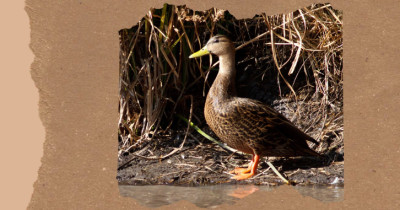
A common duck on lakes, rivers, ponds, and city waterways. The dark bill has a yellow tip, and a pale facial pattern helps separate it from familiar Mallard females.

13. Carrion Crow.
Japan also has Carrion Crows, especially in more open settings. They are slightly smaller and slimmer-billed than Large-billed Crows, though separating the two can take practice.

14. Black-backed Wagtail.
This dark-backed form of White Wagtail is common in parts of Japan, especially around open ground and water. Like other wagtails, it moves quickly on foot while pumping the tail.

15. Japanese Bush Warbler.
The Japanese Bush Warbler is famous for its spring song, but seeing the singer is harder. It stays low in shrubs and bamboo, where its plain olive-brown plumage disappears easily.

The moment she clocked the cheek spot on the Eurasian Tree Sparrow instead of the House Sparrow, she realized this wasn’t just “any bird,” it was a whole ID game happening in plain sight.
Then the White-cheeked Starlings started showing up in noisy clusters on the lawns, and her walk turned into a countdown to their evening roost.
After that, the Large-billed Crow made everything harder to ignore, strutting around like it was guarding the park and stealing attention with every bold move.
By the time she reached the rivers and canals, the Japanese Wagtail’s nonstop tail flick made her stop pretending she could “just keep walking.”
Common birds in Japanese cities
Tokyo, Osaka, Kyoto, and other large cities still provide trees, rivers, parks, temple grounds, gardens, and food. That is enough for crows, sparrows, starlings, doves, white-eyes, tits, and several waterbirds. Human behavior shapes the mix too.
Urban gulls can learn routines around food businesses, which makes Pupperish's story about a seagull waiting outside a fishmonger feel familiar even if the exact species and location differ. House sparrows have their own long history with people as well, including the strange Domino Day sparrow incident.
Common birds in Japan by habitat
The easiest way to predict Japan's everyday birds is to look at habitat rather than search for a national checklist. City parks favor bulbuls, white-eyes, tits, crows, doves, and sparrows.
Rivers and canals add wagtails, herons, kingfishers, cormorants, and ducks. Rice fields and farm edges bring egrets, larks, buntings, and raptors into the same view, while wooded hills just beyond urban areas can add woodpeckers and more secretive songbirds.
Geography matters too. Hokkaido has a cooler northern bird community and stronger winter influence from northeast Asia. Honshu holds the biggest mix of cities, mountains, forests, and farmland. Farther south, Kyushu and the Ryukyu Islands add warmer-climate species and island forms. So a bird that feels ordinary in Okinawa may be absent from a winter walk in Sapporo.
Which Japanese birds change with the seasons?
Japan sits on major East Asian migration routes. Shorebirds pass in spring and autumn, flycatchers and warblers appear in warmer months, and ducks and finches increase in winter. The Japan National Tourism Organization birdwatching guide emphasizes just how strongly the visible bird mix changes with season.
Northern Hokkaido also feels very different from subtropical Okinawa. That island-and-latitude effect makes Japan an interesting comparison with birds of Iceland and birds of Madagascar. All three are island systems, but their climates and evolutionary histories produce very different everyday birds.
Crows and magpies are part of the experience
Japan's crows are large, vocal, and intelligent. Magpies are more regional, but the broader corvid family is famous for cognitive ability. Pupperish's article on the Eurasian Magpie mirror test gives some context for why corvid behavior attracts so much attention.
For a continental contrast, birds in Spain include a more Mediterranean mix of storks, vultures, bee-eaters, and steppe birds. Japan shares some migratory families with Europe, but the daily city soundscape is distinctly East Asian.
Sources: Avibase: Japan checklist | Japan National Tourism Organization: Bird-watching in Japan
Once you can tell them apart, Japan’s sidewalks and parks feel like they’re alive with names you finally notice.
Think that’s just one bird? Learn how black plumage can mean a crow or raven, fast.
Share this article: