30 Fun Facts About Cats That Explain Their Strangest Habits

It starts the same way every time, your cat does something that feels personal, like the sudden stare, the dramatic tail puff, or the way it appears in a space that should not even be possible. You swear it was just sitting there, but somehow it noticed the tiniest twitch at the edge of the room, like it has a built-in security system for movement.
Now add the communication chaos. One minute your cat is purring like everything is fine, the next it’s doing that slow blink, bunting your hand, or kneading your blanket like it’s nursing again. And when you finally think you understand, it chatters at birds through glass, then vanishes into a hiding spot that makes absolutely no sense.
Here’s the weird part, those “strange habits” are basically a full sensory and social playbook.
Cat Facts About Senses and Movement
- Cats see much better than humans in dim light, but they still need some light to see. Total darkness defeats their eyes too.
- Movement matters more to feline vision than fine detail. A small twitch at the edge of the room can be easier to notice than a stationary object nearby.
- Cats hear frequencies above the human range. That helps them detect the high-pitched sounds made by small prey.
- Each ear can rotate toward a sound, allowing a cat to compare timing and intensity from different directions.
- Whiskers send detailed information about air movement, gaps, surfaces, and body position. Cutting them removes an important sensory system.
- A cat has a third eyelid called the nictitating membrane. It helps protect and moisten the eye, although a constantly visible membrane can signal illness.
- Cats walk with a direct-register gait, placing a back paw close to the spot where the front paw landed. The pattern supports quiet, precise movement.
- Their flexible bodies help them disappear into improbable spaces, which partly explains the appeal of photos showing cats hiding in plain sight.

While you’re watching that edge-of-the-room twitch, the cat is also using movement and dim-light vision to spot it before your brain even registers it.
How Cats Communicate
- Adult cats rarely meow at one another in the same way they meow at people. Many household cats develop a personal set of sounds for human attention.
- Purring is not limited to contentment. Cats may also purr when stressed, injured, frightened, or seeking reassurance.
- A gentle headbutt is called bunting. Through cat headbutts, facial scent glands mark familiar people and objects.
- Slow blinking can be part of relaxed social communication. A returned slow blink may help maintain a calm interaction.
- Tail position carries information. An upright tail often signals a friendly approach, while a puffed tail reflects high arousal or fear.
- Kneading begins in kittenhood, when paws press against the mother during nursing. Many adults keep the motion as a comfort behavior.
- A cat may chatter while watching birds through glass. The exact reason is unsettled, but excitement and frustrated hunting behavior are likely involved.
- Wearable cameras show how much exploration happens beyond human sight. One cat-cam recording captured rooftop movement, balancing, and neighborhood encounters.
Food, Sleep, and Everyday Cat Behavior
- Cats are obligate carnivores. They require nutrients that naturally occur in animal tissue, including taurine and preformed vitamin A.
- Domestic cats cannot taste sweetness in the same way humans can because a key sweet-receptor gene does not function normally in the species.
- The rough surface of a cat tongue is covered with backward-facing papillae made from keratin. They help with grooming and pulling meat from bone.
- Cornell specialists estimate that cats may spend 30 to 50 percent of their waking time grooming. Excessive grooming can still point to stress, pain, or skin disease.
- Cats are crepuscular, meaning their natural activity often peaks around dawn and dusk. A house cat may adjust that schedule around meals and human routines.
- Many cats sleep 12 to 16 hours a day, with kittens and older animals often sleeping more. Photos of adult cats beside their kitten lookalikes make the life-stage contrast easy to see.
- Reaction to catnip is inherited. Some cats respond strongly, some barely react, and very young kittens often show no interest.
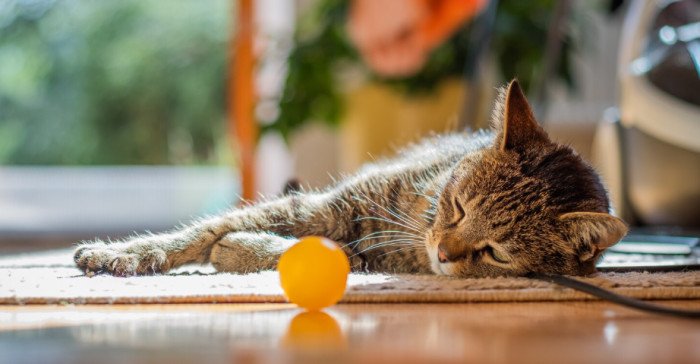
And when the purring kicks in, especially during stress or fear, it’s not just “happy cat” noise, it’s a whole reassurance strategy.
Another twist on animal perception, 20 Fascinating Facts About Cats That Will Amaze You, dives into cats’ weird habits and senses.
Then the bunting and slow blinking show up, and suddenly your cat is leaving scent messages and running a calm-check system with you.
Cat Genetics and Their History With Humans
- Domestic cats descend mainly from the Near Eastern wildcat. Their partnership with people grew as farming settlements attracted grain, mice, and efficient hunters.
- Kittens are born with closed eyes and limited hearing. Smell, warmth, and touch guide them during the earliest days.
- One litter can have more than one father. Female cats can mate with several males during the same fertile period.
- Most calico and tortoiseshell cats are female because the coat pattern is tied to genes carried on the X chromosome.
- Polydactyl cats have extra toes. The inherited trait appears frequently in some coastal populations and certain family lines.
- Domestic cats, dogs, and pigs all adjusted to life beside people, but cats retained more independent hunting behavior.
- Hedgehogs share homes with people in some countries, yet they are not close relatives of cats despite the popular phrase “hedgehog cat” in some languages.
What These Facts Reveal
Many cat behaviors that people call strange are efficient responses inherited from a small predator. Hiding protects the body, grooming maintains the coat, dawn activity matches prey movement, and scent marking organizes familiar territory without a fight.
Even a box has a purpose when it offers cover and predictable boundaries. Domestic life changes the setting but does not erase the underlying animal.
A cat needs places to climb, scratch, hide, watch, hunt through play, and retreat from contact. Reading those needs accurately is more useful than treating independence as indifference or every purr as proof that nothing is wrong.
Subtle signals carry the story.

Finally, when the tail goes upright or puffs up and the cat chats at birds behind glass, you realize it’s all connected, senses, signals, and timing.
Common Questions About Cats
Do cats dream?
Cats experience REM sleep, the stage most closely associated with dreaming in humans. Their exact dream content cannot be confirmed.
Why do cats purr?
Contentment is one reason, but purring can also appear during stress, pain, nursing, or attempts to calm themselves and others.
Can cats see in complete darkness?
No. Their eyes use very small amounts of available light efficiently, but they cannot form a visual image when no light is present.
Your cat is not being random, it’s running a tiny, coordinated communication and survival routine.
For more sense-sharpening surprises, see how dogs track scents and human routines in 30 Fun Facts About Dogs That Explain Their Remarkable Abilities.
Share this article: