17 Pink Birds That Really Exist

Birders swear they can spot a “pink bird” from a mile away, until the day they realize the color is playing tricks on them.
Then the group got stuck in that awkward moment where the bird looks pink from one angle, but shifts to salmon, red, or almost white when it turns. Flamingos were everywhere, flocks painting the shoreline coral, and a roseate spoonbill swooped in looking like a flamingo’s smaller, sharper cousin.
By the time they compared bills, legs, and wing tones, the “pink birds” label had turned into a whole mystery.
Why do some birds have pink feathers?
Pink plumage can come from pigments in food, inherited feather coloration, or structural effects that change with the angle of light. Flamingos and spoonbills obtain carotenoid pigments through their diets, while the shimmering pink on a hummingbird is produced by feather structure.
That is why the same shade does not imply a close relationship. The RSPB's list of pink and rose-colored birds also shows how loosely birders use the word pink. Several listed species are technically rosy, red, or salmon-colored.
Large pink birds around wetlands
List:
1. American flamingo
American Flamingos can appear deep coral-pink, with black flight feathers mostly hidden while standing. Their extremely long legs, down-curved bill, and S-shaped neck create one of the most recognizable bird outlines.
Large gatherings turn entire shorelines pink, as seen in Pupperish's feature on vast flamingo flocks.

2. Greater flamingo
The Greater Flamingo is generally paler than the American species, with a white-to-pink body and stronger pink on the wings. The bill is pink with a black tip. Adults vary considerably, so color depth alone is not reliable.

3. Chilean flamingo
Chilean Flamingos are pale pink with gray legs interrupted by pink joints. The bill is largely black, with a paler base. The leg pattern helps separate them from other flamingos when several species are kept together.

4. Lesser flamingo
This smaller flamingo often looks intensely pink, with a dark red bill that appears almost black from a distance. Large flocks gather on alkaline lakes in Africa and parts of Asia. Size and bill color are stronger clues than shade.

5. Roseate spoonbill
The Roseate Spoonbill has pink wings and body, a pale neck, red shoulders, and a flat spoon-shaped bill. It sweeps that bill from side to side through shallow water.
A flying spoonbill may be mistaken for a flamingo until the shorter legs and broad wings become clear.

That’s when the flamingo lineup started to feel less like a fun list and more like a color test, with the American flamingo’s coral look stealing the spotlight first.
Small pink and rose-colored songbirds
List:
6. Pink robin
Male Pink Robins have a vivid pink breast set against a dark head and back. Females are brown-gray.
The compact Australian forest bird is far smaller and darker than its name might suggest. Pupperish's Pink Robin photographs show the sharp boundary between pink and black.

This is like birds of paradise using plumes, wires, and capes to win over rivals.
7. Rose robin
The male Rose Robin wears a rosy chest and gray upperparts with a small white forehead patch. It is lighter and longer-bodied than the Pink Robin.
Both species can be difficult to see because they move through forest foliage, a habit captured in Pupperish's Rose Robin profile.

8. Pink-browed rosefinch
Males show raspberry-pink across the face, eyebrow, throat, and underparts, with darker streaks through the plumage. Females are brown and heavily streaked. The saturated male appears in Pupperish's feature on the pink-browed rosefinch.

9. Himalayan white-browed rosefinch
Adult males combine rosy red underparts with a pale eyebrow and dark wings. Their mountain habitat and heavy finch bill help separate them from small pink robins. Females are streaked brown with much less obvious color.

10. Brown-capped rosy-finch
This high-elevation North American finch mixes brown on the head and back with pink on the belly and wings. The color often looks like a wash beneath dark feather edges rather than a solid block. Flocks forage on alpine ground and snowfields.

11. Pine grosbeak
Male Pine Grosbeaks range from rosy pink to soft red, balanced by gray wings and tail. They are large, slow-moving finches with thick bills. Females replace the pink with yellow or orange on the head.

12. Rosy starling
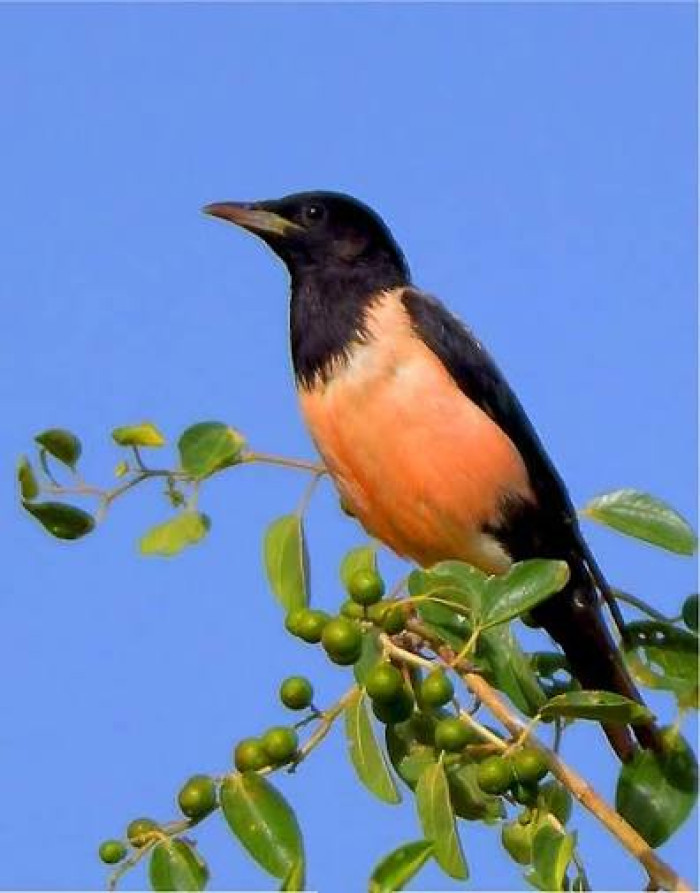
Breeding adults have a pink body, glossy black head and wings, and a loose crest. The contrast resembles a bird wearing a black hood and jacket. Outside breeding condition, pale feather edges make the plumage look less clean.
13. Anna's hummingbird
The male's crown and throat can flash hot pink or magenta in direct light, then turn dark when the angle changes. This is structural color rather than a flat pigment. The gray-green body keeps the pink concentrated around the face, a shift shown clearly in Pupperish's Anna's Hummingbird profile.

Next came the Greater flamingo, where people kept insisting it was “the same pink,” even though the wings and bill tip were giving totally different clues.
Then someone spotted the Chilean flamingo’s pale pink body and those gray legs with pink joints, and suddenly the group stopped trusting the shade alone.
Pink parrots, pigeons, and doves
List:
14. Galah
The Galah is an Australian cockatoo with a pink face, chest, and belly beneath a pale gray back and wings. Its short crest can lift when the bird is excited. Large noisy flocks and the strong parrot bill are equally useful identification clues.

15. Major Mitchell's cockatoo
This cockatoo has pale pink plumage and a spectacular crest banded in red, yellow, and white. The raised crest is unforgettable, but resting birds look much softer. It is also called the Pink Cockatoo.

16. Pink-headed fruit dove
The male has a bright pink head and throat, green wings, and a pale belly. Females are greener and duller.
It lives in mountain forests on parts of Indonesia, where the combination of fruit-dove shape and precise color blocks identifies it.

17. Bourke's parakeet
Wild-type Bourke's Parakeets are dusty brown with pink across the chest and belly, plus blue accents on the wings. Captive color mutations can appear much brighter.
The small parrot shape and long pointed tail distinguish them from rosy finches.

Finally, the roseate spoonbill ended the debate by flying in with that flat, side-to-side spoon bill, proving it was never just “another pink bird.”
Is a pink bird actually red?
Bird color names are descriptive rather than standardized. A Pine Grosbeak may be called red in one guide and rosy in another. A male Rose-breasted Grosbeak can look pink under soft light, and Pupperish's report on a split-plumage Rose-breasted Grosbeak shows how sex and plumage can complicate the label.
Use the Audubon bird guide to compare location, season, and sex after matching the color. Nearby categories include red birds, pale white birds, and warm-toned species in the orange birds guide.
The checklist didn’t get easier, it got louder, and nobody wanted to be the one who called the wrong bird “pink.”
Want more shocking color, see red birds with blazing heads and bright plumage.
Share this article: