
The Smartest Birds and What They Can Actually Do

New Caledonian crows, ravens, African grey parrots, and keas all look like they’re just doing bird stuff, until you realize they’re running mini playbooks in the real world. One bird shapes leaf strips like it’s packing for a trip, another saves food like it’s managing an investment portfolio, and somewhere in the middle, a parrot turns sound into something closer to meaning.
The complicated part is that the “smart” moments don’t come from one viral stunt. Tool habits show up as regional designs, ravens adjust hiding plans when another bird is watching, and parrots can link labels to requests under tight conditions. Then keas go full menace-curious, investigating vehicles and buildings like they’re hunting for the next puzzle.
So when you hear “intelligence,” don’t picture one trick. Picture a whole network of choices.
1. New Caledonian Crows
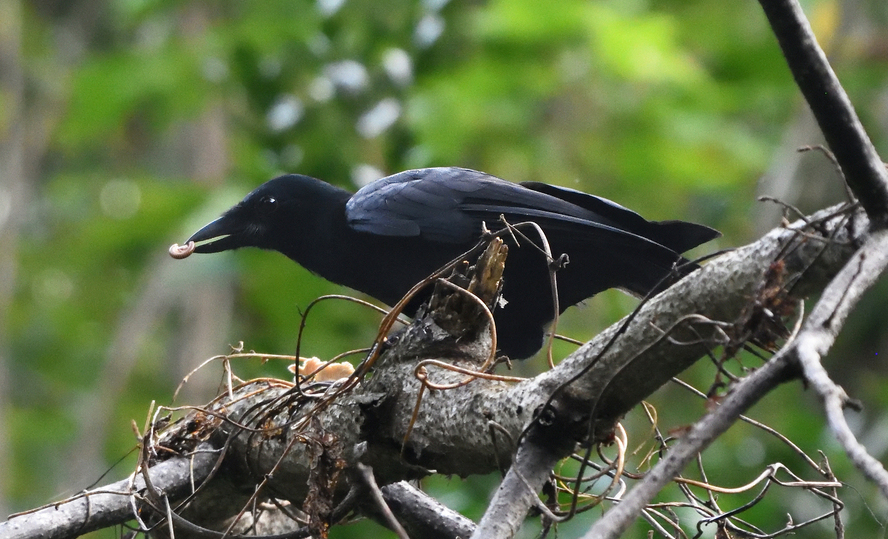
New Caledonian crows make and use hooked tools to pull larvae from wood. They trim twigs, shape leaf strips, choose suitable lengths, and can solve multi-step tasks in laboratories.
Tool use is not a one-off trick. Wild populations preserve regional designs, suggesting learning and local traditions. Young birds have an inherited tendency to handle objects, then refine skill through practice and observation.
Other crows are inventive too. One office crow stealing a spoon shows opportunism, although a viral incident alone is weaker evidence than controlled experiments and repeated wild observations.
2. Ravens
Ravens cache food, track what competitors have seen, and adjust hiding behavior when another bird may steal the prize. Experiments also suggest they can plan for future tool use or trading opportunities.
Their social world is demanding. Ravens form alliances, recognize rank, remember past interactions, and use play to develop physical and social skills.
They also manipulate other animals. Calls can attract wolves to carcasses that ravens cannot open, after which the birds feed on scraps. Intelligence here is social, ecological, and practical.

3. African Grey Parrots
African grey parrots are strong vocal learners, but their intelligence extends beyond imitation. Irene Pepperberg’s work with Alex showed that a parrot could use spoken labels for colors, shapes, materials, numbers, and requests under controlled conditions.
Later work with other greys tested probability, sharing, delay of gratification, and inference. Performance varies, and no result makes a parrot equivalent to a human child across every domain.
Language-like labels are still remarkable. The article on talking birds explains how vocal learning turns anatomy and social attention into recognizable speech.

4. Keas
Keas are alpine parrots from New Zealand with intense curiosity and a tendency to investigate objects, vehicles, buildings, and people. They solve mechanical puzzles, cooperate, and learn by watching others.
That curiosity creates conflict when birds damage rubber, move objects, or raid human areas. A comparison of kea and crow facts captures why both groups seem mischievous: persistent exploration keeps revealing new opportunities.
Play matters. Keas manipulate objects and interact socially even when no immediate food reward is present, behavior linked with flexible learning.

5. Eurasian Magpies
Magpies remember food caches, recognize social relationships, and adapt to urban environments. A well-known mirror test found that some removed a colored mark visible only in reflection, a result interpreted as possible self-recognition.
Mirror evidence in birds remains debated because motivation, touch, training, and test design can alter performance. Failing the test does not prove an animal lacks self-awareness, and passing it does not reveal every aspect of self-concept.
The Eurasian magpie intelligence story remains important because it pushed researchers to test cognitive assumptions beyond mammals.

6. Scrub-Jays and Other Jays
Western scrub-jays remember what food they hid, where they hid it, and how long ago. They adjust recovery depending on whether a cached item is likely to have spoiled.
Birds that have stolen caches themselves are more likely to move food after being watched, suggesting that their own experience influences how they predict another bird’s behavior.
Jays also warn relatives about predators and remember thousands of storage locations. Memory is not an abstract party trick when winter survival depends on finding scattered food.

7. Pigeons
Pigeons can learn large sets of visual categories, distinguish styles, recognize letters, and solve location or sequence tasks. Their homing ability combines memory with several navigational cues.
They rarely receive the same respect as parrots and crows because familiarity makes their achievements easy to ignore. Urban success itself requires flexible feeding, route learning, threat assessment, and tolerance of human activity.
A bird does not need to invent a hook to be intelligent. Matching the right strategy to a city can be equally effective.

8. Cockatoos
Cockatoos open multi-part puzzle boxes, use tool sets, and copy actions. Wild Goffin’s cockatoos have been observed making several tool types for extracting food.
Rhythmic movement provides another clue. Some cockatoos spontaneously dance to music, vary their movements, and respond to tempo without simply copying a trainer.
Household parrots can turn intelligence into noise or destruction when bored. A smart animal needs appropriate social contact, foraging, movement, and safe challenges, not just a cage full of static toys.

That’s the same vibe as the New Caledonian crow that steals a spoon, because opportunism is only interesting when it keeps showing up in the wild.
Tool use is one kind of superpower, but flightless rivals like ostriches, penguins, and kiwis traded wings for survival.
Meanwhile, ravens are out here caching food and quietly recalculating risk when another bird might steal it right out from under them.
And if you think that’s impressive, African grey parrots take the social spotlight, using spoken labels to line up colors, shapes, materials, and requests.
Then keas kick down the door of “normal bird behavior,” poking at vehicles and buildings like the world is one big mechanical puzzle waiting to be solved.
Do Smart Birds Understand Cause and Effect?
Sometimes, within limits. Birds can learn that pulling a string raises food, that water displacement brings a reward within reach, or that one tool accesses another. Performance changes when a task requires unfamiliar physics or suppressing an obvious response.
Researchers therefore compare many tests rather than declaring intelligence from one viral clip. Motivation matters. Vision matters. Beak and foot anatomy matter. A task designed for primate hands may underestimate a bird.
Crows holding a long grudge against a neighbor also demonstrate memory, but the exact thoughts behind retaliation cannot be read directly. Good interpretation stops before the story becomes human psychology in feathers.
Which Bird Is the Smartest?
Corvids and parrots have the strongest overall cases because they repeatedly show flexible problem-solving, memory, social learning, and innovation. Naming one winner would depend on the test.
New Caledonian crows dominate tool tasks. African greys stand out in symbolic communication. Ravens excel in social strategy and planning. Keas bring persistence and play.
Different exams. Different champions.
Even a familiar magpie returning with its family uses recognition and memory that once would have been dismissed as instinct alone.
By the time you’re done watching these birds, it’s hard to believe they’re not running errands with purpose.
Want more bird surprises beyond tool tricks, read whether birds can smell myth or evidence.
Share this article:





