
Talking Birds That Can Mimic Human Speech

A 28-year-old woman refused to believe her living room had a “real” conversation happening until her African grey parrot started dropping perfectly timed phrases during her nightly routine. It wasn’t random squawking, either. The bird hit pitch, rhythm, and those consonant-like bursts like it had been practicing alongside the TV captions.
Here’s the complicated part, her budgerigar kept chiming in with fast, high, courtship-style repeats, and her neighbor’s Amazon parrot would sometimes answer with laughter and alarm-like sounds from the other side of the wall. Suddenly the house sounded like a tiny audio studio, layered voices bouncing off furniture, and nobody could tell what was mimicry and what was “response.”
By the time the goodbyes started sounding emotionally precise, the whole household was stuck wondering how far talking birds can really go.
How Birds Produce Human-Like Sounds
Humans form sound with the larynx at the top of the windpipe. Birds use the syrinx near the point where the trachea divides toward the lungs. Muscles change tension and airflow across vibrating tissues.
Some birds control the two sides of the syrinx independently, allowing layered or rapidly changing sounds. The tongue, beak, throat, and mouth shape the final result.
Birds have no human lips or vocal cords, yet a skilled mimic can reproduce pitch, rhythm, consonant-like noises, laughter, alarms, and individual voices. Anatomy sets limits, but learning pushes surprisingly close.
1. African Grey Parrots
African greys are widely regarded as the strongest combination of clear speech and cognitive use. Many learn large vocabularies, imitate voices accurately, and apply familiar words in recurring contexts.
Irene Pepperberg’s work with Alex moved the subject beyond anecdotes. Under controlled testing, Alex used labels for objects, colors, shapes, materials, quantities, and concepts such as same or different. That research is one reason African greys consistently appear among the smartest birds.
No parrot becomes a tiny person. The achievement is avian: a social bird learned to use human sounds as practical symbols.
An African grey responding during a final goodbye can sound emotionally precise, although a clip cannot prove the bird understands death in the human sense.

2. Budgerigars
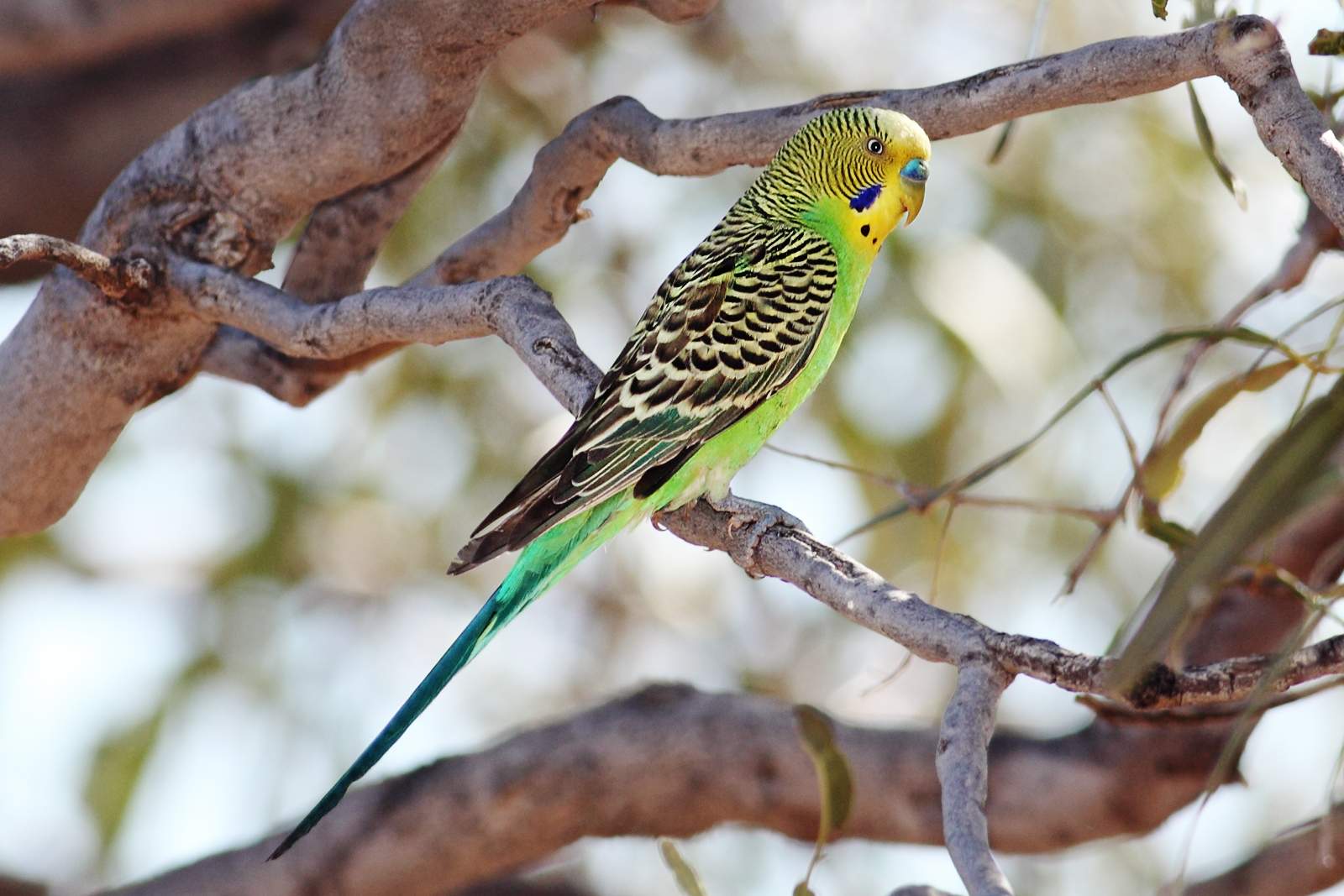
Budgerigars, or budgies, can learn remarkable numbers of words and phrases despite their small size. Male budgies often become especially persistent mimics because vocal learning is part of social courtship and flock communication.
Their speech tends to be fast and high-pitched. Repetition, close interaction, and clear routines help listeners recognize it.
A large vocabulary is not the same as flexible comprehension. Still, combining phrases, matching household timing, and addressing familiar people can reveal more than random playback.
3. Amazon Parrots
Amazon parrots are known for loud, expressive voices and strong musical imitation. Several species learn songs, laughter, greetings, and household routines with convincing rhythm.
They can also become noisy, territorial, or overstimulated, especially around breeding condition. Speech ability does not make the bird easy to keep.
Body language matters. Raised neck feathers, pinned pupils, tail fanning, and posture can signal excitement or warning even while the bird says a friendly phrase.

4. Indian Ringneck Parakeets
Indian ringnecks often produce clear, high voices and can build substantial vocabularies. Their social confidence and curiosity make them popular in talking-bird videos.
Young birds may pass through a bluffing stage involving lunging or testing boundaries. Consistent handling based on choice and reinforcement works better than punishment.
Words should not distract from welfare. A talking ringneck still needs space, flight or exercise, foraging, sleep, veterinary care, and social stability.

5. Hill Mynas
Hill mynas are among the clearest non-parrot mimics. They reproduce human tone and pitch with striking accuracy and may sound less “bird-like” than many parrots.
Their natural calls are loud and varied. In the wild, vocal flexibility supports communication in forest environments; in captivity, human voices become part of the soundscape.
Mynas have different diets and care needs from parrots. Speech talent should never be the only reason for acquiring one.

6. Cockatoos and Macaws
Cockatoos can learn words, songs, and rhythmic routines, although clarity varies. Their social intensity often produces attention-seeking vocal behavior as well as mimicry.
Macaws have powerful voices and can copy phrases with strong volume. One macaw learning curse words reflects a simple rule: birds repeat sounds that receive attention, whether people approve or not.
Ignoring unwanted phrases while rewarding calmer alternatives may reduce repetition, but no method can make a naturally loud species quiet. Expectations must match biology.

7. Ravens and Crows
Ravens and crows can imitate human speech, animal calls, machinery, and environmental sounds. Captive or human-habituated individuals are most likely to copy voices closely.
Their natural communication already includes varied calls and social learning. A raven may use a copied sound to attract attention or because repetition itself is rewarding.
Corvid speech is less common in homes because these birds are wild animals with complex legal and welfare requirements. Intelligence does not make them suitable pets.

That’s when the African grey’s “same or different” kind of timing started to feel less like noise and more like a cue during her object-color-shape routine.
It’s the same kind of “wait, really?” mystery as whether birds fart, and what science can actually confirm.
Meanwhile, her budgie’s rapid, high-pitched word bursts kept matching the household schedule, so every familiar phrase landed like it had been rehearsed.
Then the Amazon parrot from next door cut in with laughter and alarm-like sounds, turning the whole apartment into a chaotic call-and-response.
And during the final goodbye, the parrot’s voice hit that precise goodbye moment, leaving her questioning whether it was just sound or something eerily close.
Do Talking Birds Know What They Are Saying?
Sometimes they connect sounds with outcomes. A bird may request food, greet one person by name, answer a practiced question, or use a phrase at a predictable moment.
Context can also be learned without human-like grammar. Saying “hello” when a door opens may be an association with the event, yet it is still meaningful communication if the sound reliably changes social behavior.
A parrot screaming for help may summon police because the phrase sounds urgent. Whether the bird feels human-style distress depends on context that a headline cannot provide.
Why Birds Copy Bad Words and Alarms
Loud, emotional reactions reward mimicry. If everyone laughs, shouts, or runs into the room when a bird copies a curse or smoke alarm, the sound becomes socially valuable.
Quiet praise for desired words and minimal reaction to unwanted ones can shift attention, although deeply practiced sounds may persist. Preventing exposure is easier than erasing a favorite phrase.
Birds also repeat calls that control a household. A parrot making the family dance learns that one sound can trigger an entire group response. Hard to beat that reward.
Should You Get a Bird Because It Can Talk?
No. Parrots and mynas can live for years or decades, make severe noise, damage objects, bite, and require specialized care.
A sad comic about parrots captures the mismatch between novelty and responsibility. The talking phase never replaces daily cleaning, safe housing, veterinary costs, enrichment, and long-term planning.
An owner declining to pet-sit a parrot may sound unreasonable until the workload and risk are understood. Choose the species for its full needs, not one possible trick.
The apartment didn’t just get louder, it got personal.
Want the real scoop on corvids and parrots, from tool use to planning? Check out what the smartest birds can actually do.
Share this article:





