
18 Types of Snakes With Pictures and Identification Tips

It started with a “harmless” snake, the kind people swear they’ve seen a dozen times, until it showed up right where it should not have been.
A 28-year-old woman spotted it near the front steps, her neighbor was filming from the sidewalk, and her dog kept inching closer like it was just another backyard visitor. The tricky part was that everyone had a different guess, from “triangular head so it’s venomous” to “pale rings so it must be coral,” and the location kept contradicting the guesses.
By the time the group compared tail shape, body build, and markings from a distance, the real problem was obvious: the snake’s identity depended on details people were skipping.
How to Identify a Snake Safely
- Use location first. A species outside its known range is an unlikely match.
- Observe body build, scale texture, markings, and tail shape from a distance.
- Do not rely on pupil shape. Light, angle, and regional exceptions make it unreliable.
- Do not assume a triangular head means venomous. Many harmless snakes flatten their heads when threatened.
- Use local wildlife authorities or verified regional guides for any snake near people or pets.
18 Types of Snakes From Major Groups
List:
1. King Cobra
The king cobra is the longest venomous snake. It has a narrow hood, long body, and olive, brown, or dark coloring with pale bands in many individuals. Unlike true cobras in the genus Naja, it belongs to its own genus and often preys on other snakes.

2. Black Mamba
Black mambas are long, slim African snakes with gray, olive, or brown bodies. The name refers to the dark interior of the mouth, not the skin. They are fast, alert, and highly venomous.

3. Coral Snake
Coral snakes are small elapids with bright ring patterns. Color rhymes are unsafe because patterns differ across regions and unrelated harmless snakes can look similar. Location and expert confirmation are necessary.

4. Rattlesnake
Rattlesnakes are pit vipers found in the Americas. A segmented rattle usually identifies adults, although rattles can break and young snakes have small buttons. Heat-sensing pits sit between the eyes and nostrils.

5. Copperhead
Copperheads have copper-colored heads and dark hourglass bands that narrow across the spine. Their camouflage works exceptionally well in leaf litter. They are venomous pit vipers of eastern and central North America.

6. Cottonmouth
Cottonmouths are heavy-bodied semi-aquatic pit vipers of the southeastern United States. Dark crossbands may fade with age. A threatened animal may open its mouth to reveal the pale lining that gives the species its common name.

7. Gaboon Viper
Gaboon vipers have broad heads, heavy bodies, and complex geometric patterns that disappear into African forest leaf litter. They carry extremely long fangs. A closer profile of the Gaboon viper’s camouflage and anatomy shows why stepping near one can be more likely than seeing it clearly.
Forest range can overlap with several types of owls, but an owl sighting offers only habitat context, not proof of a snake species.

8. Boa Constrictor
Boa constrictors are large nonvenomous snakes from the Americas. Brown saddle-like markings run along a thick muscular body. They kill prey by constriction and give birth to live young.

If you’re comparing lookalikes, this is like the turtle ID guide that breaks down sea turtles, box turtles, and softshells.
9. Green Anaconda
Green anacondas are among the heaviest snakes. Olive bodies with large dark spots blend into South American wetlands. Their eyes and nostrils sit high on the head, useful for an aquatic ambush predator.

10. Reticulated Python
Reticulated pythons have detailed net-like patterns of gold, brown, black, and cream. They are among the longest snakes and occur in Southeast Asia. Escaped captive animals can create surprising encounters, including a large python hanging from a tree beside a road.

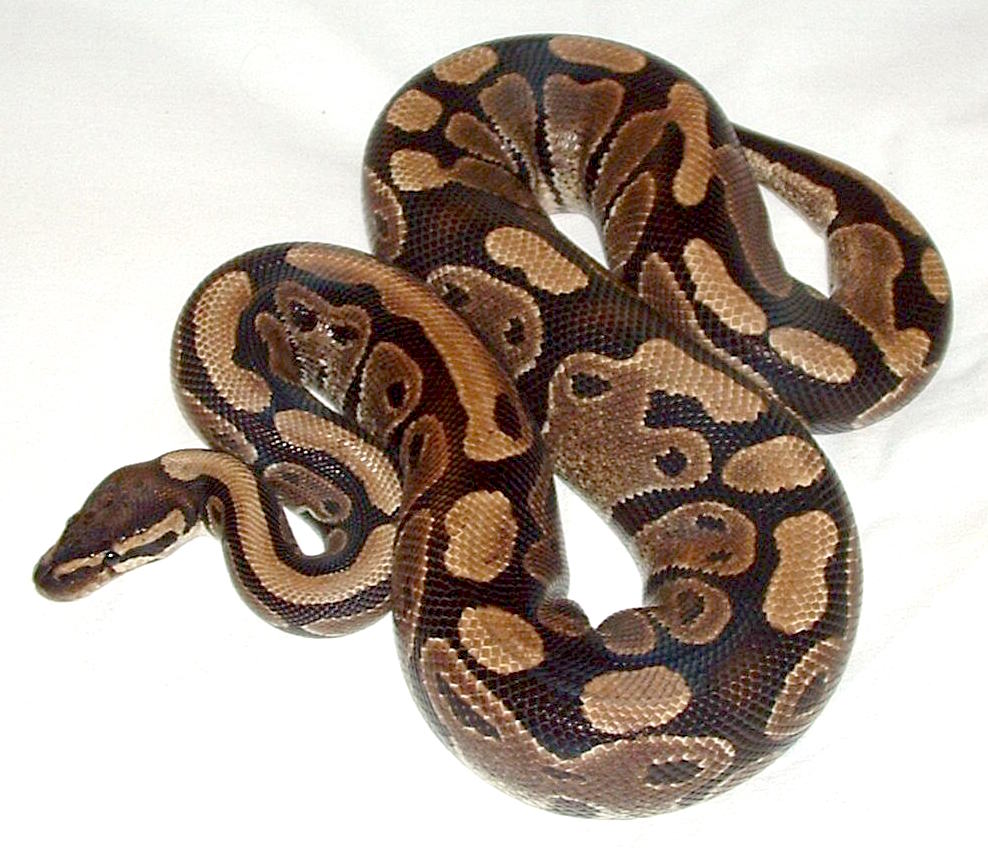
11. Ball Python
Ball pythons are short, heavy-bodied African pythons with dark brown blotches. When frightened, they often coil around the head in a tight ball. Captive color morphs can look very different from the wild pattern.
12. Corn Snake
Corn snakes are slender nonvenomous rat snakes from the southeastern United States. Wild animals usually have orange or brown bodies with red saddle markings and black-and-white checkered bellies. They are strong climbers and constrict small prey.

13. Kingsnake
Kingsnakes are nonvenomous constrictors known for eating other snakes. Patterns vary from bands to chains, stripes, or speckles. The California kingsnake often appears black and white or brown and cream.

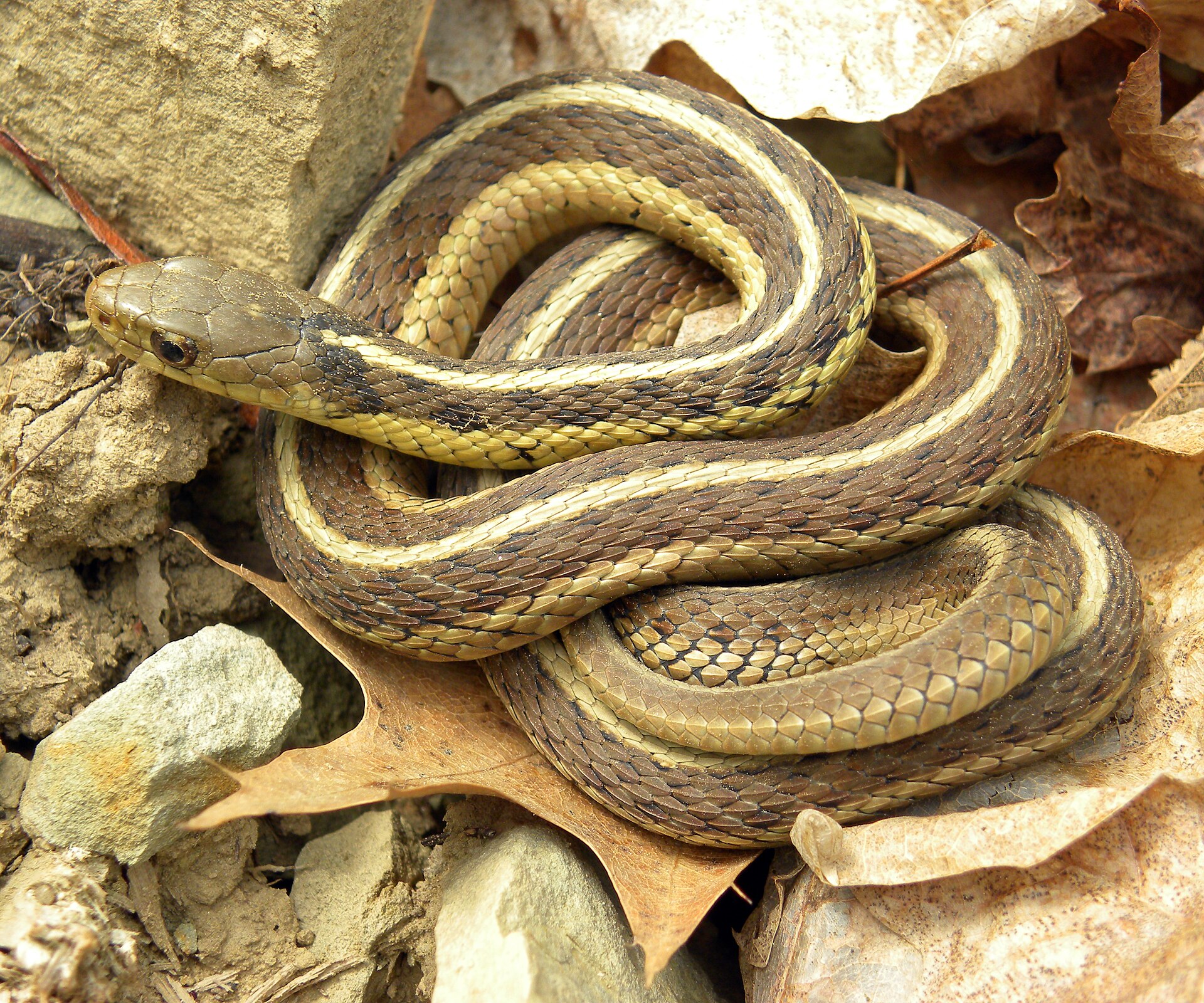
14. Garter Snake
Garter snakes are slender North American snakes with one or more lengthwise stripes. They live in gardens, wetlands, fields, and woodland edges. Color varies widely, so range and stripe placement matter.
15. Hognose Snake
Hognose snakes have upturned snouts used for digging. When threatened, some flatten the neck, hiss, strike with a closed mouth, and eventually play dead. Their dramatic display often causes them to be mistaken for more dangerous species.
Tropical canopies and forest floors may also support types of monkeys, making regional range maps useful when a wildlife photograph includes several animals.

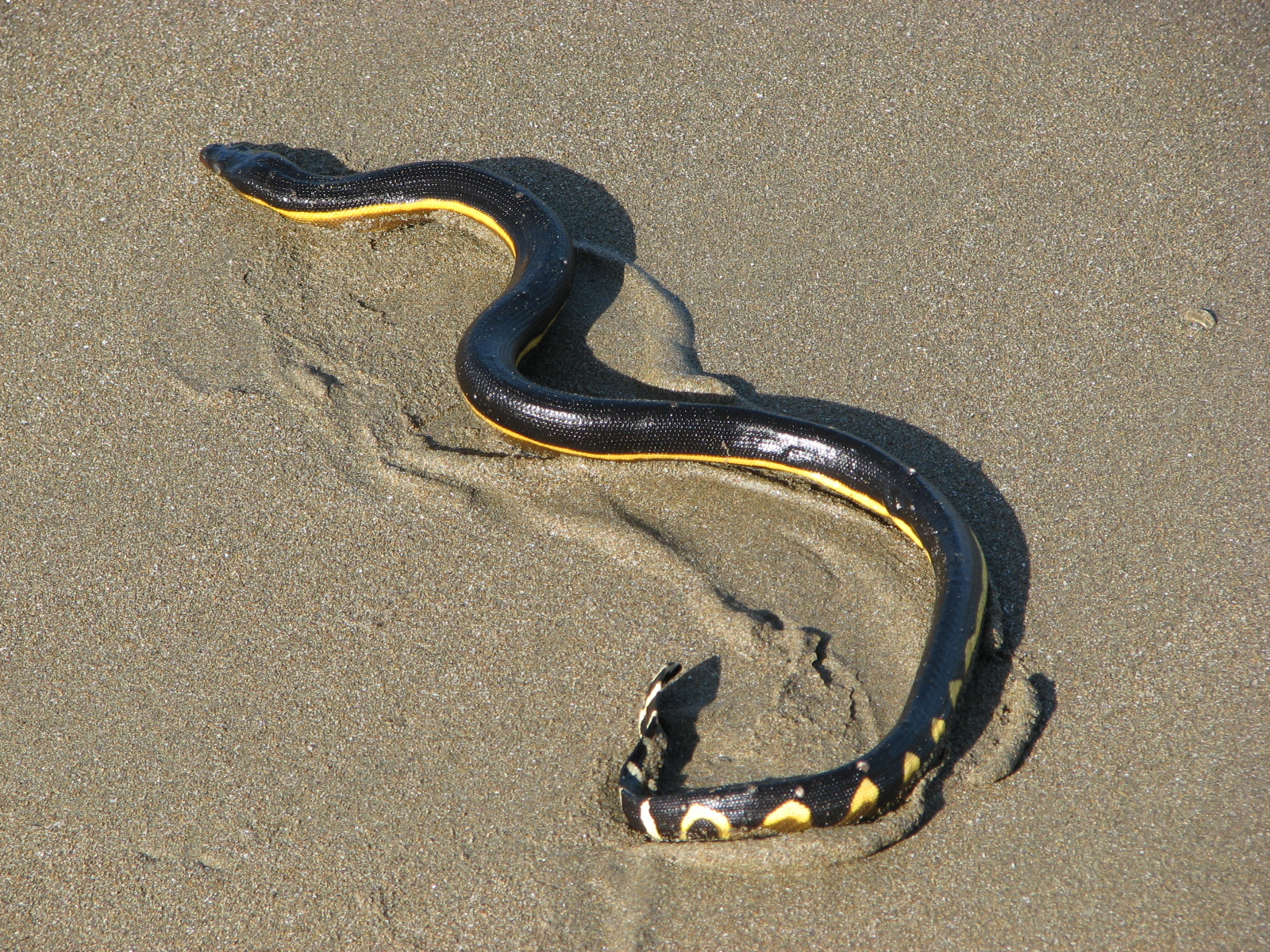
16. Sea Snake
Sea snakes and sea kraits are venomous marine elapids of the Indian and Pacific oceans. Many have flattened paddle-like tails. True sea snakes spend nearly all their lives in water, while sea kraits return to land.
17. Vine Snake
Vine snakes have extremely slender bodies, pointed heads, and camouflage suited to branches. Green species can be difficult to separate from vegetation. Different vine snake groups occur in Asia, Africa, and the Americas.

18. Blind Snake
Blind snakes are small burrowing snakes with smooth scales, reduced eyes, and blunt heads. Many resemble shiny earthworms. They feed largely on ant and termite eggs or larvae and are rarely seen above ground.

The neighbor’s phone was already rolling when the woman insisted the triangular head meant danger, even though that claim can fail fast with snakes that flatten their heads when threatened.
Then the dog’s slow approach made everyone talk at once, and suddenly nobody wanted to rely on pupil shape, since light angle and regional exceptions can flip the “obvious” look.
When they finally backed up to observe scale texture, body build, and tail shape, the location question hit hard, because a species outside its known range is usually not the match everyone assumed.
Venomous and Nonvenomous Is Not a Visual Shortcut
Venom systems evolved in several snake groups, and harmless species often mimic venomous patterns. Head shape, pupil shape, and color rules all produce dangerous mistakes.
A better approach is conservative. Keep distance, photograph only if safe, and use a regional authority. The Smithsonian National Zoo reptile resources demonstrate the range of reptile adaptations without reducing snakes to a single dangerous category.
Snake Color and Pattern Problems
The same species may appear striped, banded, blotched, plain, dark, or pale. Captive breeding adds hundreds of artificial morphs. Young snakes may also look brighter than adults.
Rare wild colors attract attention. A rainbow snake seen in Florida carried glossy iridescent scales, while an eastern indigo snake found in Alabama showed how a nearly uniform dark body can still belong to a distinctive native species.
Snakes in Water, Trees, and Underground
Habitat changes the body. Sea snakes have paddle tails, vine snakes are narrow and lightweight, blind snakes push through soil, and anacondas carry eyes high on the head. Form follows where the snake moves.
Some locations are defined by one rare species. Brazil’s Snake Island and its golden lanceheads demonstrate how isolation can concentrate a snake in a very small range.
Snakes Within Wider Animal Habitats
Large introduced snakes can also alter ecosystems. A report on a Burmese python swallowing a deer shows the prey size possible for a heavy constrictor, while another escaped python appeared on a highway.
Snake identification should end with confidence only when the location, pattern, build, and reliable regional source agree.
When they do not agree, distance is the correct answer.
The family dog walked away first, but everyone left wondering how many wrong “snake facts” they had just used.
Want more mind-blowing snake facts, like how they “hear” without ears, check these surprising snake facts.
Share this article:





