
Are Birds Mammals? Here Is How They Are Classified

A 28-year-old woman refused to accept that birds are “just like mammals,” mostly because her group chat would not stop arguing about it. One person swore it was obvious, “they’re warm-blooded, they have hearts, they’re basically the same.” Another insisted it was all about vibes and feathers.
Then the debate got messier when someone brought up the big checklist: mammals have mammary glands, hair at some stage, three middle-ear bones, and a single lower jaw bone called the dentary. Birds, meanwhile, have feathers, toothless beaks, air sacs tied to their lungs, and a skeleton shaped by dinosaur ancestry, and their babies hatch from shelled eggs. Even eggs did not settle it, because monotreme mammals like the platypus also lay eggs.
So the real question became less “what looks similar” and more “how they’re classified.”
Why Birds Are Not Mammals
Mammals are defined by a package of inherited features. The most important is the presence of mammary glands, which produce milk for young. Mammals also have hair at some stage of life, three small bones in the middle ear, and a single lower jaw bone called the dentary.
Birds do not have that package. They have feathers, toothless beaks, air sacs connected to the lungs, and a skeletal system shaped by their dinosaur ancestry. Their young develop in shelled eggs, although egg-laying alone cannot separate the groups because monotreme mammals such as the platypus also lay eggs.
No milk glands. No hair coat. No mammalian jaw.
The contrast becomes obvious even among unusual species. New Zealand developed a bird-heavy ecosystem with very few native land mammals, a history behind its remarkable bird dominance. Those birds filled ecological roles that mammals occupy elsewhere without becoming mammals themselves.
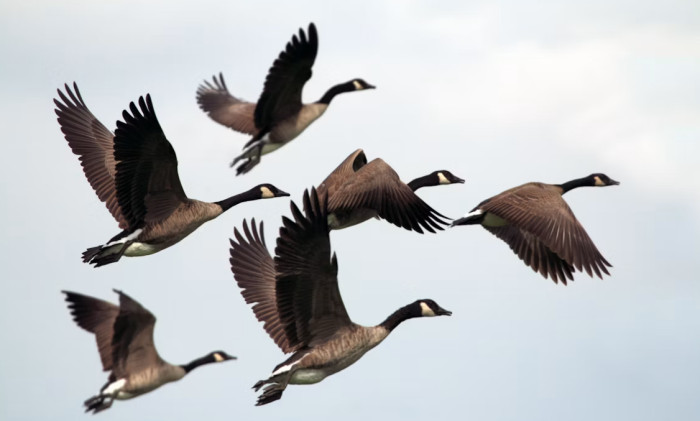
That’s when the group chat jumped from milk glands to “wait, birds have air sacs connected to the lungs,” like it was a plot twist.
What Class Are Birds In?
Birds are in the class Aves. Mammals are in Mammalia. Both sit within the vertebrates, animals with backbones, and both are tetrapods, a broad evolutionary group descended from four-limbed ancestors.
The branches separate much deeper in the family tree. Mammals are synapsids. Birds belong to the sauropsid line and evolved from theropod dinosaurs. That is why the related question are birds reptiles needs a more nuanced answer than the mammal question.
Classification is based on common ancestry, not just appearance. A whale looks less like a mouse than a penguin does, yet the whale and mouse share defining mammalian ancestry. The same logic keeps every bird, from the tiny bee hummingbird to an ostrich, inside Aves.
Why Birds and Mammals Seem Similar
Birds and mammals evolved several comparable solutions to the same problems. Both are endothermic, meaning they produce enough internal heat to regulate body temperature. Both have four-chambered hearts and high oxygen demands. Many species also show learning, play, long parental care, social cooperation, and individual recognition.
These are examples of convergent evolution, where separate lineages arrive at similar traits because those traits work. Wings provide another example. Birds and bats both fly, but a bird wing is a feathered forelimb and a bat wing is a skin membrane stretched across elongated fingers.
Same problem. Different construction.
A cold-climate yellow penguin and an Arctic mammal both need insulation, but one relies on feathers and the other on hair or fur. Similar performance does not require the same ancestry.
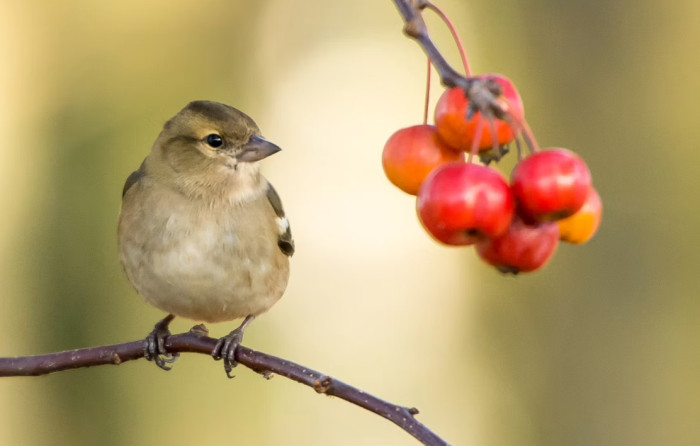
Right after they argued about monotremes and the platypus, someone mentioned New Zealand’s bird-heavy ecosystem and how the birds took over the roles mammals usually fill.
And if you thought “reptile” was a stretch, every living bird, from a chicken to an albatross, comes from the surviving dinosaur lineage.
Do Birds Have Any Mammal-Like Traits?
They do, but none changes their classification. Kiwis have hair-like feathers and nostrils near the tip of the bill. Pigeons and flamingos produce nutrient-rich crop secretions that parents feed to chicks, sometimes called crop milk. The name is convenient, not anatomical. It is not produced by mammary glands.
Some birds give birth to behavior that looks almost mammalian too. Ravens maintain complicated social relationships. Parrots can learn vocal labels. Penguins may cooperate through long breeding cycles. Large raptors such as the harpy eagle invest heavily in a small number of offspring.
That overlap makes birds feel familiar. Biology still places them on another branch.
Birds, Reptiles, and Dinosaurs
Calling birds non-mammals is simple. Placing them beside reptiles requires modern evolutionary language. Birds are living dinosaurs, specifically the surviving avian branch of theropod dinosaurs. In a cladistic system that includes every descendant of a common ancestor, birds fall inside Reptilia.
This does not mean a sparrow is a lizard. It means the everyday category called reptiles often leaves birds out for convenience, while the evolutionary category includes them. The separate guide on whether birds are dinosaurs explains the fossil evidence, including feathers, wishbones, eggs, and skeletal similarities.
Birds are also warm-blooded, unlike the usual image people have of reptiles. That difference reflects how varied the reptile and dinosaur branches became over time.
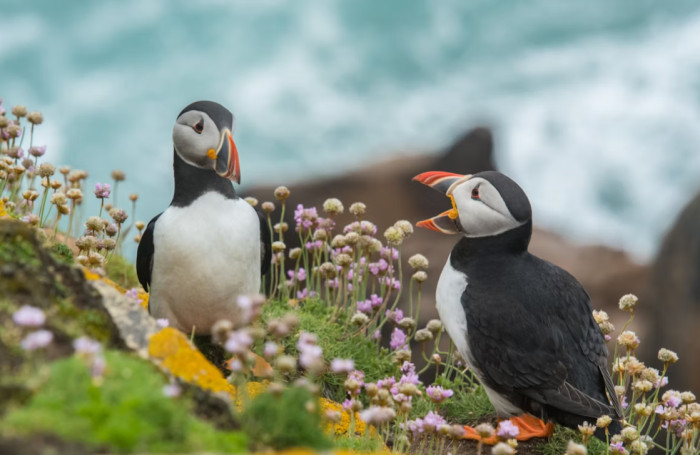
Then the conversation zoomed out to the family tree, Aves versus Mammalia, and suddenly “birds are mammals” sounded less like a fact and more like a misunderstanding.
By the time they compared four-chambered hearts and endothermy, everyone realized the similarities are real, but they do not change the classification.</p>
The Direct Answer
Birds are not mammals. They are feathered vertebrates in the class Aves, descended from theropod dinosaurs and separated from the mammal line by hundreds of millions of years of evolution.
The shared traits are still useful. Warm blood, advanced senses, parental care, and complex behavior show how different animal groups can reach comparable solutions without becoming close relatives.
Different branch. Similar pressures. Very different animal.
Common Questions About Bird Classification
Are bats birds or mammals* Bats are mammals. Their wings are skin membranes supported by elongated fingers, and females feed young with milk. Powered flight evolved separately in bats and birds, which is why the two groups can perform a similar task with very different anatomy.
Are penguins mammals because they cannot fly* No. Flight is not required for bird classification. Penguins have feathers, lay hard-shelled eggs, breathe through avian lungs and air sacs, and descend from flying bird ancestors. Losing flight changed how their wings work, not where they belong in the family tree.
The family dinner did not end well, because the birds kept winning the argument on biology, not vibes.
Still convinced birds are “just” something else, read why a sparrow sits in the reptile family tree.
Share this article:





