30 Fun Facts About Horses From Their Hooves to Their Memory

A horse can look calm while doing something wildly specific, like locking its legs in place to rest without fully lying down. Those hooves are not just cute, they are built for one functional toe, and the whole body is basically a finely tuned system of balance, senses, and survival tricks.
Picture a quiet barn yard where a horse’s ears rotate independently, pinned ears flicker when irritation hits, and the eyes scan for danger with a wide field of vision. Now add the complication, horses cannot vomit easily, they breathe through their nostrils during exercise, and their sleep depends on feeling safe enough to get real REM time.
By the time you reach the foals that can stand and move almost immediately, the whole “just a horse” idea starts to fall apart.
Horse Facts About Their Bodies
- A horse stands on one functional toe on each foot. The hoof is the enlarged nail surrounding that single digit.
- Horses are measured in hands, with one hand equal to four inches. Height is taken at the withers, the ridge above the shoulders.
- A pony is generally no taller than 14.2 hands, although breed rules can create exceptions. A pony is not simply a young horse.
- Horses have a very wide field of vision because their eyes sit on the sides of the head. Small blind spots remain directly in front and behind.
- Their ears rotate independently and reveal attention as well as emotion. Pinned ears can warn of irritation, fear, or pain.
- Horses breathe through their nostrils rather than switching freely to mouth breathing. Clear airways are therefore critical during exercise.
- They cannot vomit easily because of the structure of the stomach and esophagus. Digestive problems can become serious quickly.
- Horse sweat contains a protein called latherin, which helps water spread through the coat. That is why sweating horses can look foamy.
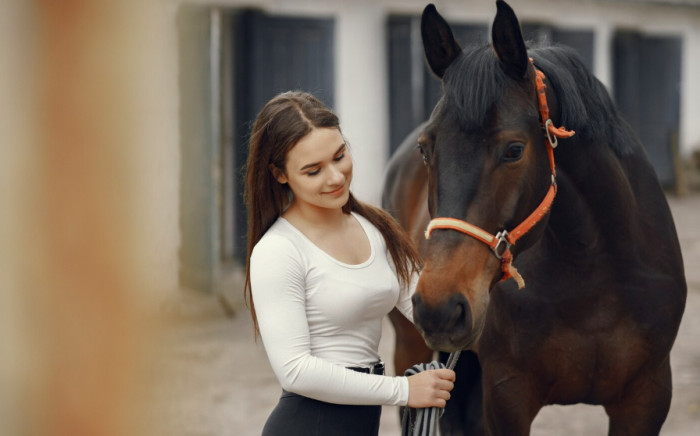
That’s when you notice how the wide side-set eyes still leave tiny blind spots right in front and behind, like the horse is constantly running a background safety scan.
How Horses Sleep and Communicate
- A horse can rest while standing because a system of tendons and ligaments helps lock the legs with limited muscular effort.
- Deep REM sleep still requires lying down. A horse that never feels safe enough to lie down may become sleep deprived.
- Horses communicate through ears, muzzle tension, tail movement, posture, touch, smell, and vocalizations. Much of the conversation is quiet.
- In natural settings, horses live in stable social groups. Isolation can contribute to stress and repetitive behaviors.
- Free-ranging horses may graze for 16 to 19 hours per day, taking tens of thousands of bites while moving gradually across the landscape.
- A nicker is a low, soft vocalization often used during close social contact. A whinny carries much farther.
- Foals can stand and begin moving soon after birth. For a prey animal, mobility is an early survival requirement.
- Horses remember familiar companions after long separations. A documented three-horse reunion reflects the durable social recognition owners often observe.
Breeds, Colors, and Unusual Horse Traits
- All domestic horses belong to the same species, even when their size, coat, movement, and build look dramatically different.
- Coat color and breed are separate categories. Chestnut, bay, black, gray, and spotted patterns can occur across many breeds.
- The Akhal-Teke is known for coats that can reflect light with a metallic appearance. That trait explains the nickname golden horse.
- Some horses grow thick facial whiskers or moustache-like hair. The Gypsy Vanner is especially well known for abundant hair and leg feathering.
- Photos of horses with moustaches look staged, but the hair is real and varies by individual.
- A gray horse is usually born a darker color and becomes lighter over time. Many eventually appear nearly white.
- A horse can sleep, play, resist, or drop to the ground for many reasons. Viral clips of a horse that appears to play dead should not be treated as normal training behavior.
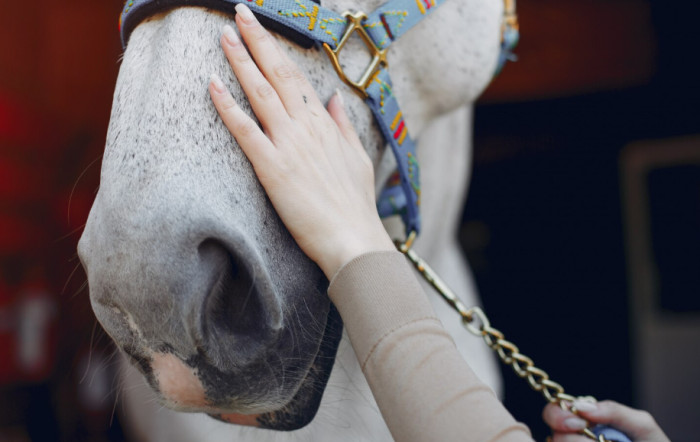
Then the barn mood shifts, because ears can rotate independently, pinned ears can signal fear or pain, and the quiet “conversation” keeps going through posture and tail movement.
On the animal side, these dog facts about reading scent, movement, tone, and routines are equally wild.
Next comes the survival part, horses can rest standing thanks to tendons and ligaments, but if they never feel safe enough to lie down, REM sleep never really happens.
Horses in Evolution and Human Life
- Modern horses, zebras, and donkeys belong to the genus Equus. Their distant ancestors were much smaller and had several toes.
- People domesticated horses thousands of years after their relationship with dogs had already begun.
- Unlike pigs and many other domestic animals, horses evolved as specialized grazers with a digestive system built for frequent small meals.
- Horses can share landscapes with coyotes in North America, although healthy adult horses are rarely typical prey.
- Human breeding produced animals suited for racing, pulling heavy loads, endurance travel, cattle work, and compact companionship.
- Horses can learn routines and discriminate between people. Their memory is one reason consistent handling matters.
- A calm horse may notice a change in posture or muscle tension before a person realizes they have made it. Subtle signals count.
What These Facts Reveal
A horse body makes sense when viewed as the product of open ground, constant grazing, herd life, and rapid escape. Wide vision, mobile ears, strong legs, sensitive feet, and a digestive system designed for repeated small meals all point in the same direction.
Modern management can work against that design when movement, forage, social contact, or rest are restricted. That does not mean every horse must live identically, but it does mean behavior deserves to be read as information.
Repetitive actions, resistance, and sudden changes may reflect discomfort or environment before they reflect disobedience. The biology comes first.
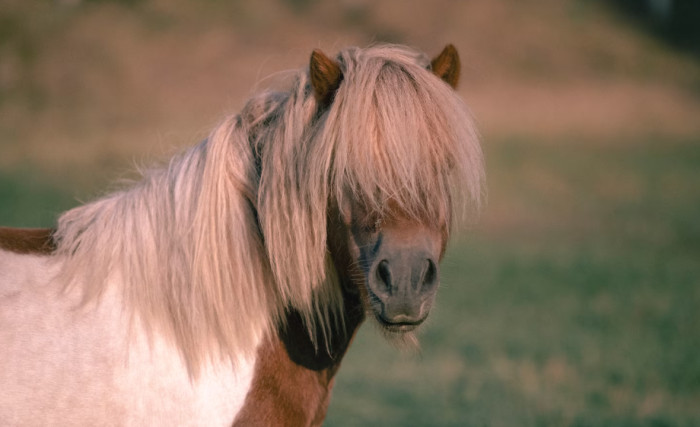
And once you remember foals can stand and start moving right after birth, the whole routine makes sense, mobility is the first defense for a prey animal.
Common Questions About Horses
Can horses sleep standing up?
Yes, they can doze and rest while standing. They need to lie down for enough deep REM sleep.
Why can horses not vomit?
Strong muscular structures and the angle where the esophagus enters the stomach make reverse movement extremely difficult.
What is the difference between a horse and a pony?
Height is the common dividing point, but ponies also tend to have proportionally shorter legs, thicker necks, and heavier coats.
If you think horses are just grazing all day, their bodies and memories will prove you wrong fast.
Shocked by how horses cool down? Then see the weird cooling truth that leaves people stunned.
Share this article: